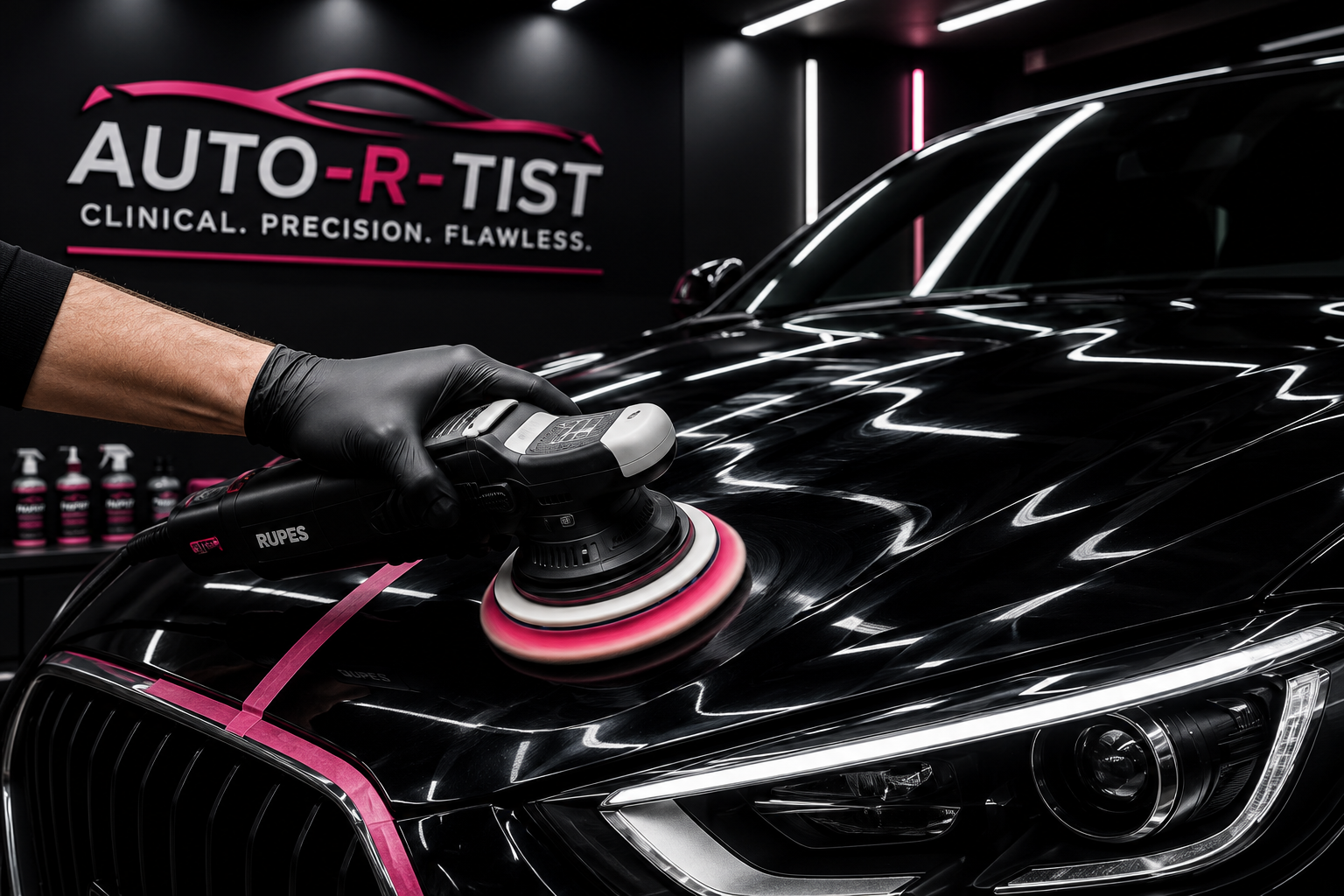
Paint Protection Film, commonly known as PPF, is designed to protect your car’s original paint from stone chips, road debris, minor scratches, stains, and everyday environmental exposure. But what happens when the film becomes old or damaged? Can it be removed without affecting the paint underneath?
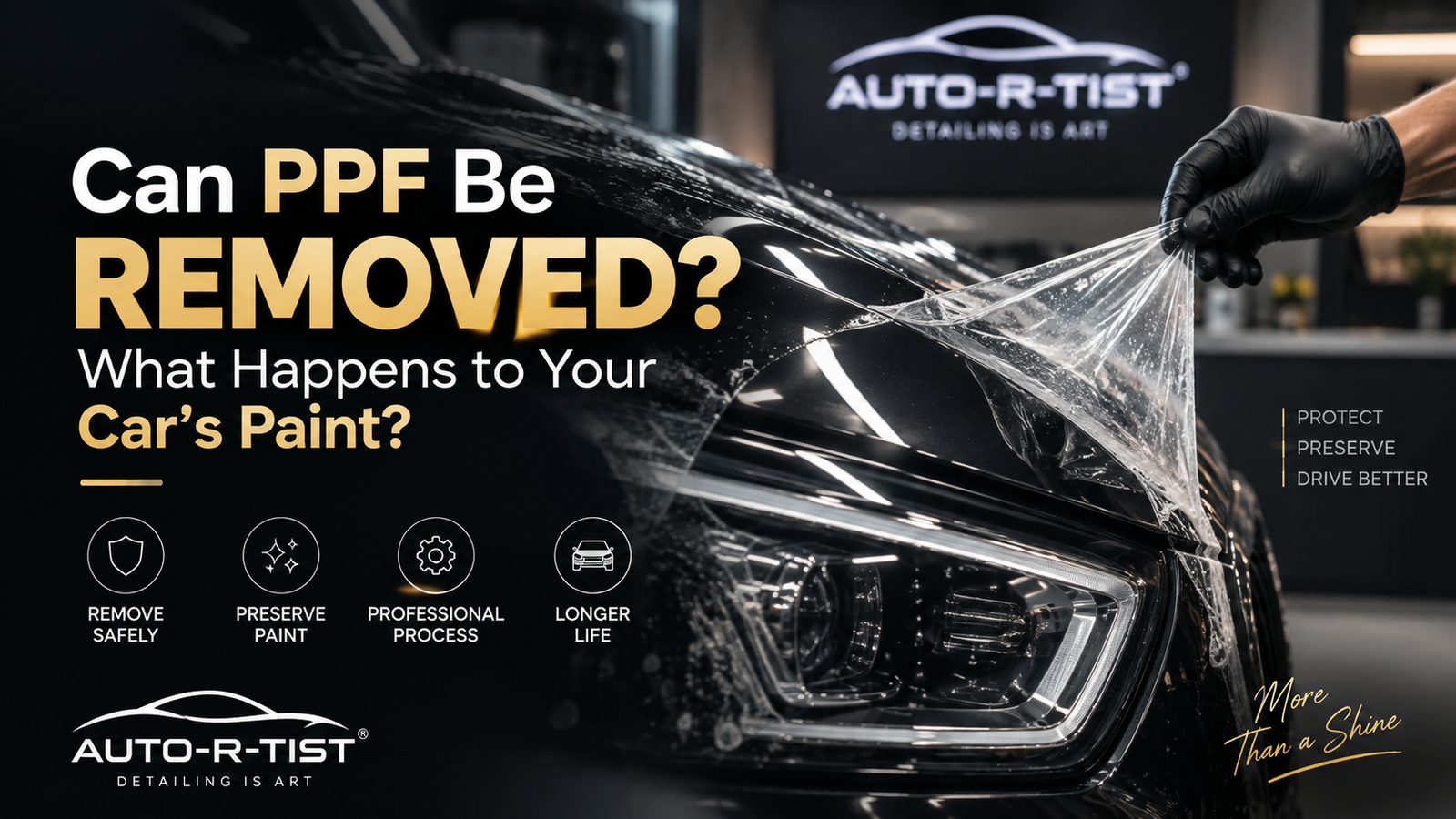
The simple answer is yes, PPF can be removed. When the film is properly installed and professionally removed using the correct technique, it is designed to come off without damaging the vehicle’s finish. Both 3M and XPEL recommend professional removal methods for their PPF products. (3M)
At Auto-R-Tist, we believe PPF removal should receive the same attention to detail as PPF installation. The objective is not only to remove the old film but also to preserve and properly prepare the paint underneath.
What Happens to the Paint After PPF Removal?
One of the main purposes of PPF is to protect the original paint from everyday exposure. Therefore, the paint underneath the film may actually be better preserved than surrounding areas that were left unprotected.
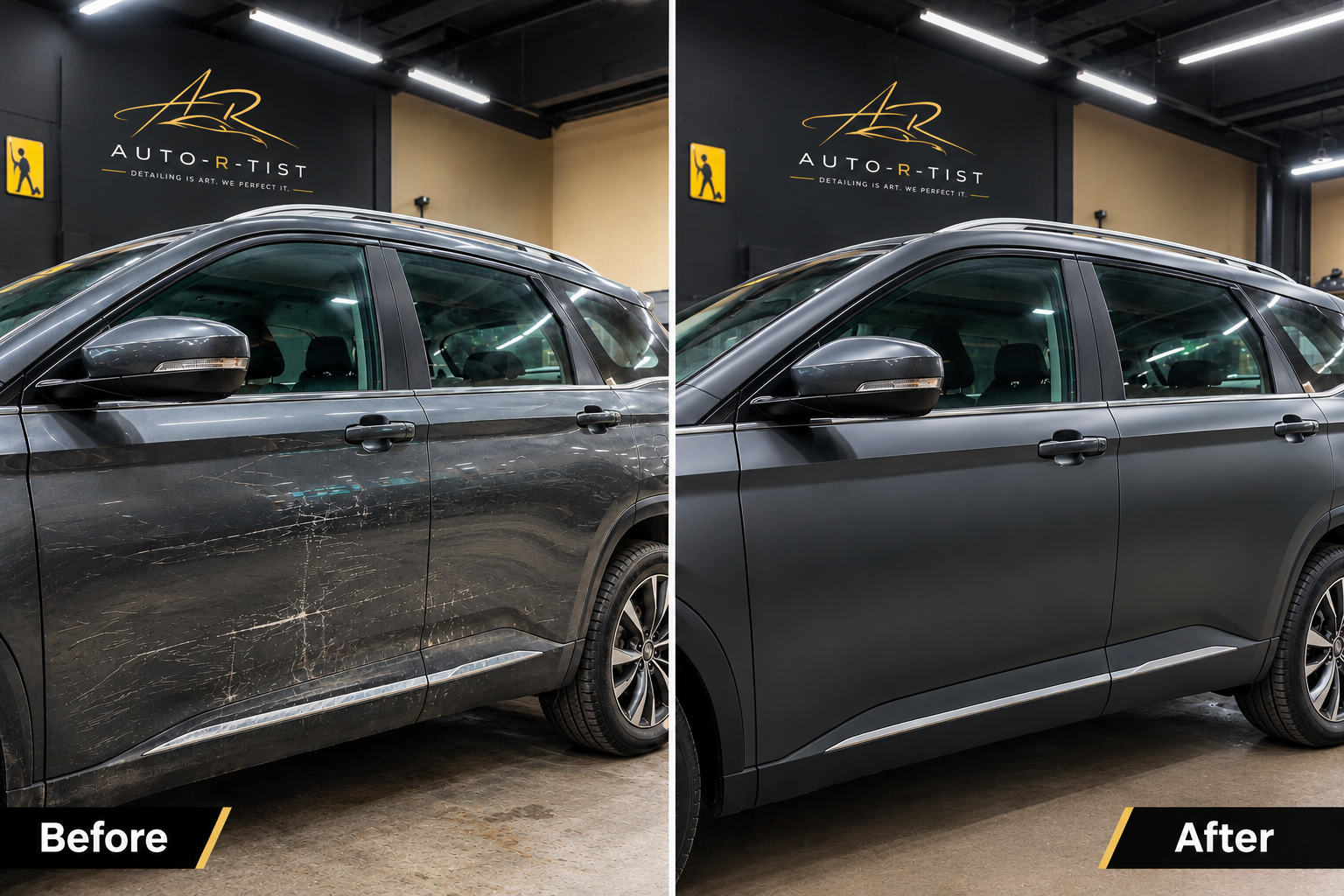
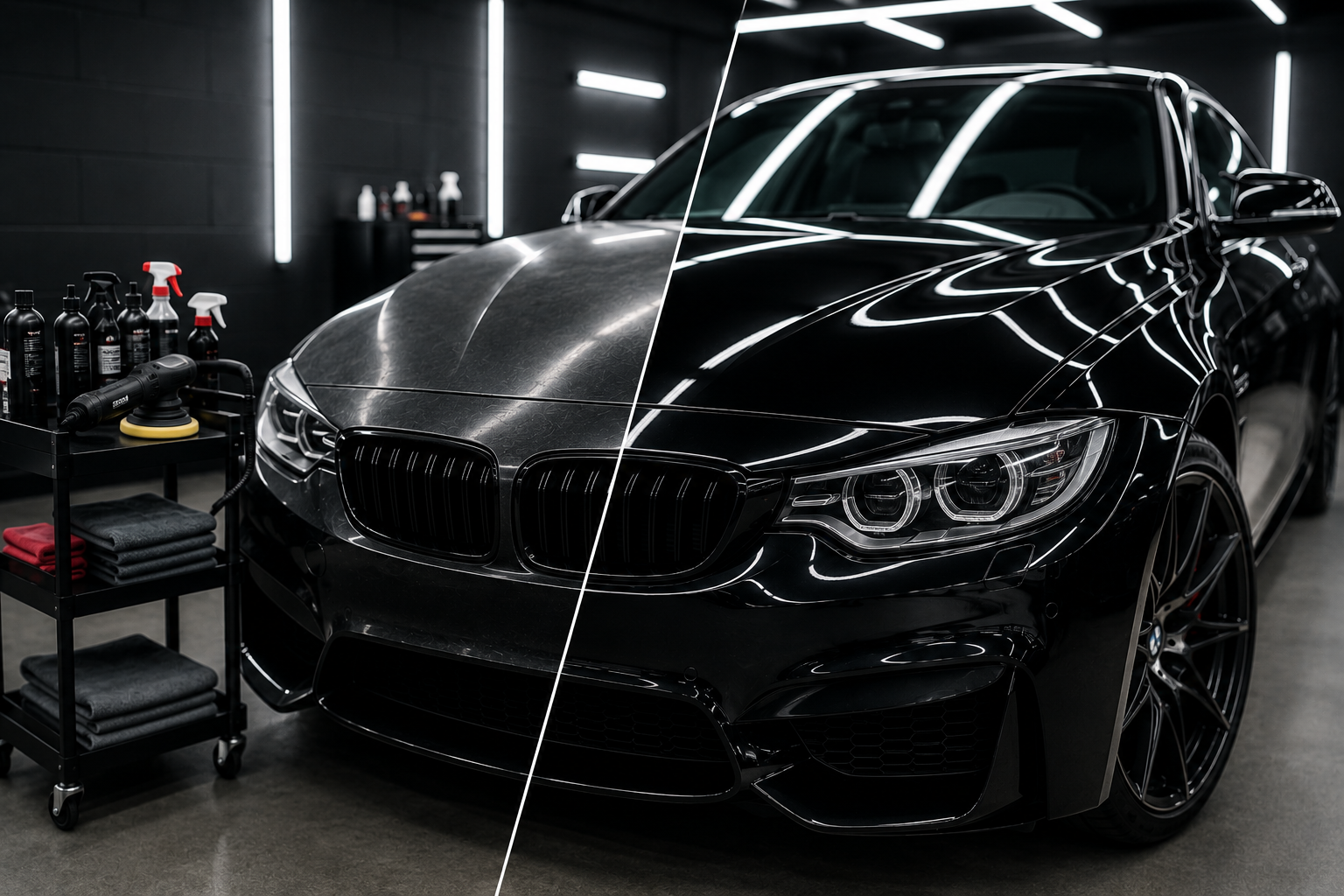
After removing PPF, you may notice a difference in gloss or appearance between protected and unprotected areas. This does not necessarily mean that the film has damaged the paint. In fact, 3M notes that protected areas can appear more vibrant or glossier because they have been shielded from environmental exposure. (3M)
However, the final condition depends on several factors, including the age of the film, paint condition, installation quality, previous repairs, and removal technique.
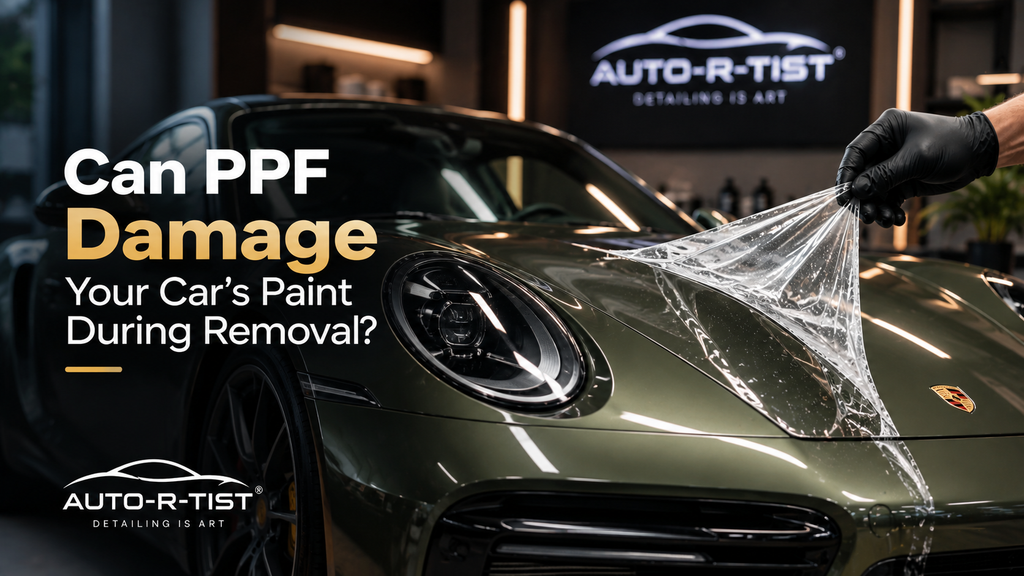
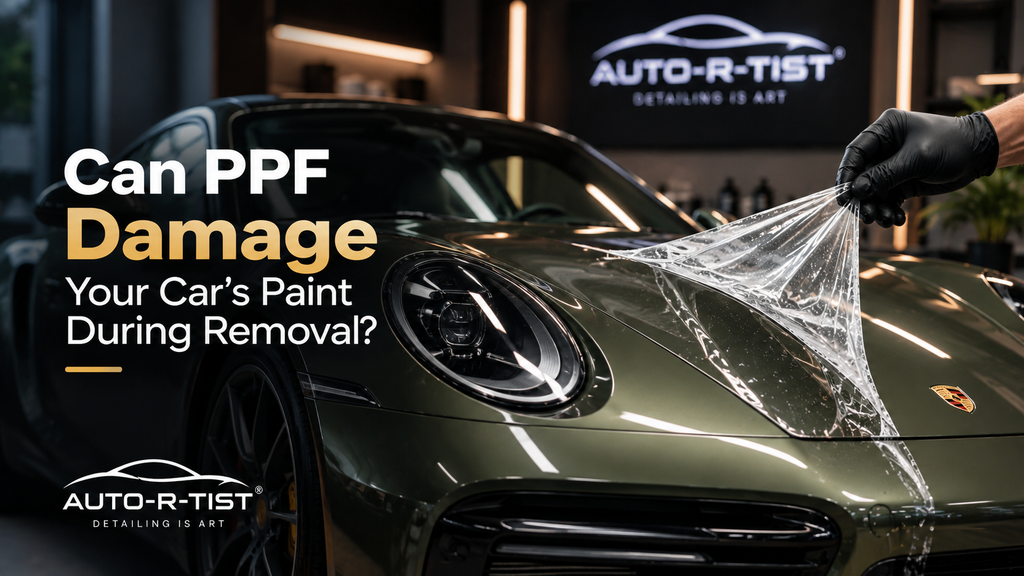
Can PPF Damage Your Car’s Paint During Removal?
Quality PPF is designed to be removable. However, the condition of the paint underneath is important.
Factory paint and previously repainted panels may behave differently during removal. If a vehicle has had body repairs or a repaint, the installer should inspect those areas before removing the film.
The condition of the PPF also matters. Older or heavily weathered film can become brittle and may require more careful handling.
For this reason, professional PPF removal is recommended, particularly when the vehicle has premium factory paint or previous paintwork. XPEL also recommends professional removal and states that correctly removing its PPF should not harm the vehicle’s paint.
How Is PPF Removed Professionally?
Professional PPF removal is a controlled process rather than simply peeling the film away.
1. Inspect the Film and Paint
First, the technician checks the condition of the PPF and the surface underneath. Existing damage, lifting edges, cracks, discoloration, and previous repairs are identified before removal begins.
2. Use Controlled Heat or Steam
Heat or steam helps soften the film and adhesive. This makes the PPF more flexible and allows it to be removed with less force.
3M recommends using a heat gun or steamer and removing the film at a controlled angle of around 30–60 degrees. XPEL recommends steam-assisted removal with the film pulled at a shallow angle. (3M Multimedia)
3. Remove the Film Carefully
The film is gradually lifted and pulled rather than being forcefully removed. This controlled approach helps the adhesive release with the film.
4. Clean Any Adhesive Residue
After the PPF is removed, some adhesive residue may remain. A suitable adhesive-removal method can be used to clean the surface without unnecessary scraping or abrasion.
5. Inspect the Paint
Finally, the exposed paint is inspected. If required, the surface can be polished or corrected before installing new PPF or applying another protection treatment.
Why Does Old PPF Become Difficult to Remove?
PPF is constantly exposed to sunlight, heat, rain, dust, road contaminants, and temperature changes.
Over time, older film may become:
- Brittle
- Discolored
- Cracked
- Stained
- Difficult to lift
- More likely to tear during removal
As a result, older PPF may
require additional time and care. Trying to remove heavily aged film quickly can make the process more difficult.
What About Adhesive Residue?
Adhesive residue can sometimes remain after PPF removal. This does not automatically indicate paint damage.
The residue can usually be treated with an appropriate adhesive remover and carefully cleaned from the surface. The important part is to avoid aggressive scraping or unsuitable chemicals that could create unnecessary marks.
Once the adhesive has been removed, the panel can be cleaned and inspected again.
Should You Remove PPF Yourself?
Although PPF may look easy to peel, DIY removal is not always the best approach.
Improper removal can cause the film to tear, leave excessive adhesive behind, or place unnecessary stress on the paint. The risk can be greater on previously repainted panels.
For this reason, manufacturers such as 3M and XPEL recommend professional PPF removal. (3M)
A professional inspection is especially useful when the vehicle has expensive factory paint, older PPF, or previous bodywork.
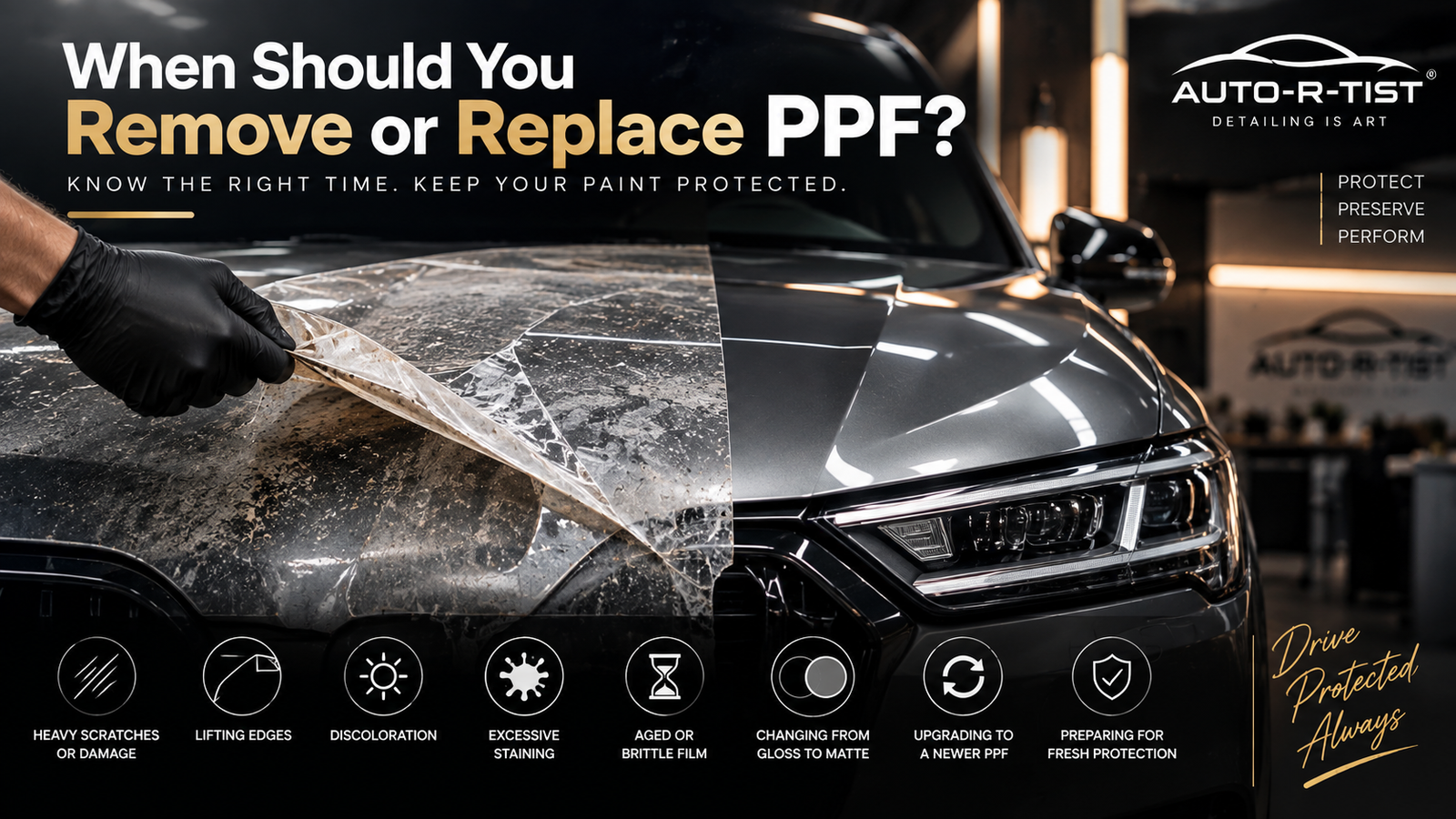
When Should You Remove or Replace PPF?
PPF may need to be removed or replaced when the film has reached the end of its useful service life or when its appearance has deteriorated.
Common reasons include:
- Heavy scratches or damage
- Lifting edges
- Discoloration
- Excessive staining
- Aged or brittle film
- Changing from gloss PPF to matte PPF
- Installing a newer PPF product
- Preparing the vehicle for a fresh protection package
The right decision depends on the condition of both the film and the paint.
What Happens After PPF Removal?
Removing old PPF does not mean your vehicle has to remain unprotected.
A typical replacement process can include:
Old PPF Removal → Adhesive Removal → Surface Cleaning → Paint Inspection → Paint Correction if Required → New PPF Installation
This gives the new film a clean and properly prepared surface.
If the paint is already in good condition, the vehicle can proceed directly to the next protection stage after proper preparation.
Professional PPF Removal at Auto-R-Tist
At Auto-R-Tist, we approach PPF removal as part of the complete automotive protection process.
Our focus is on careful film removal, adhesive residue management, paint inspection, and proper surface preparation. Whether you are replacing old PPF, changing the finish, or preparing your vehicle for another detailing service, the condition of the existing film and paint should always be considered first.

Remove carefully. Inspect properly. Protect better.
Final Thoughts
So, can PPF be removed without damaging your car’s paint?
Yes. Quality PPF is designed to be removable, and professional removal techniques help minimize unnecessary stress on the vehicle’s finish. However, the condition of the film, paint, adhesive, previous repairs, and removal technique can all affect the final result.
That is why PPF removal should not be treated as a simple peel-off process. With the right technique and proper surface inspection, the vehicle can be prepared for new PPF, ceramic coating, paint correction, or another professional detailing service.
If you are looking for PPF removal, PPF replacement, paint protection, or premium car detailing in Hyderabad, Auto-R-Tist can help you assess the condition of your vehicle and choose the appropriate protection solution.
Auto-R-Tist — Detailing Is Art. We Perfect It.