Paint Protection Film (PPF) is designed to create a physical barrier between your vehicle’s paint and everyday road hazards. But the film itself also has a top surface that plays an important role in how the PPF looks, performs, and lasts. This surface is commonly referred to as the PPF top coat.
A well-engineered top coat can improve the film’s appearance, water behaviour, resistance to everyday contaminants, and self-healing performance. Understanding these characteristics can help car owners make a more informed decision when choosing Paint Protection Film.
At Auto-R-Tist, we focus on professional automotive protection where film quality, surface preparation and installation precision all contribute to the final result.
What Is a PPF Top Coat?
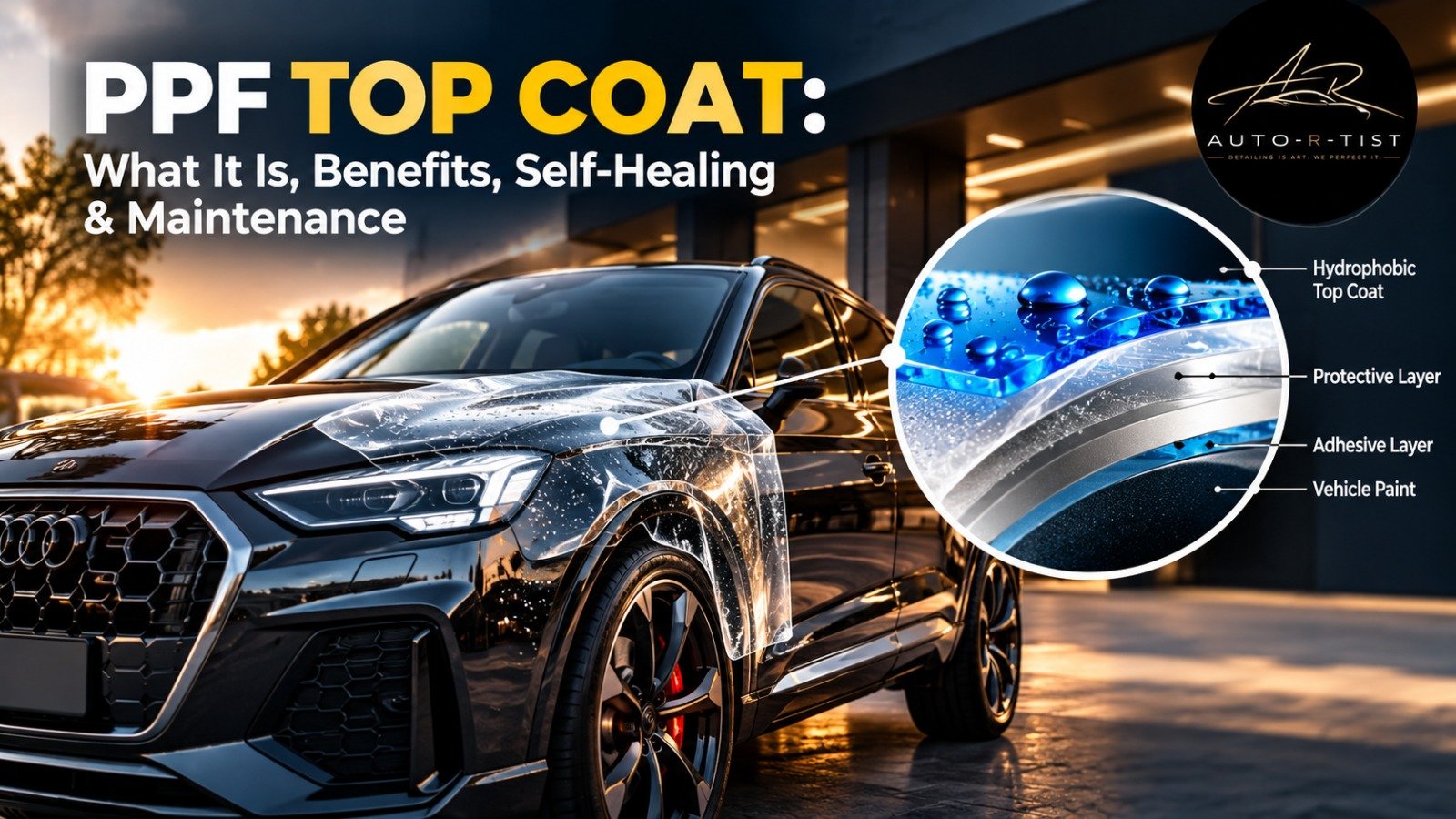
The PPF top coat is the outermost functional layer of a paint protection film. It sits above the film’s protective core and is the surface that comes into direct contact with water, dust, road contaminants, cleaning chemicals and minor environmental exposure.
Depending on the PPF technology, the top coat can be engineered to provide properties such as:
- High surface gloss
- Hydrophobic behaviour
- Resistance to staining and contamination
- Improved surface durability
- Self-healing of certain minor marks
The exact performance varies between PPF products, so it is important to look beyond the film’s appearance and consider its construction and specifications.
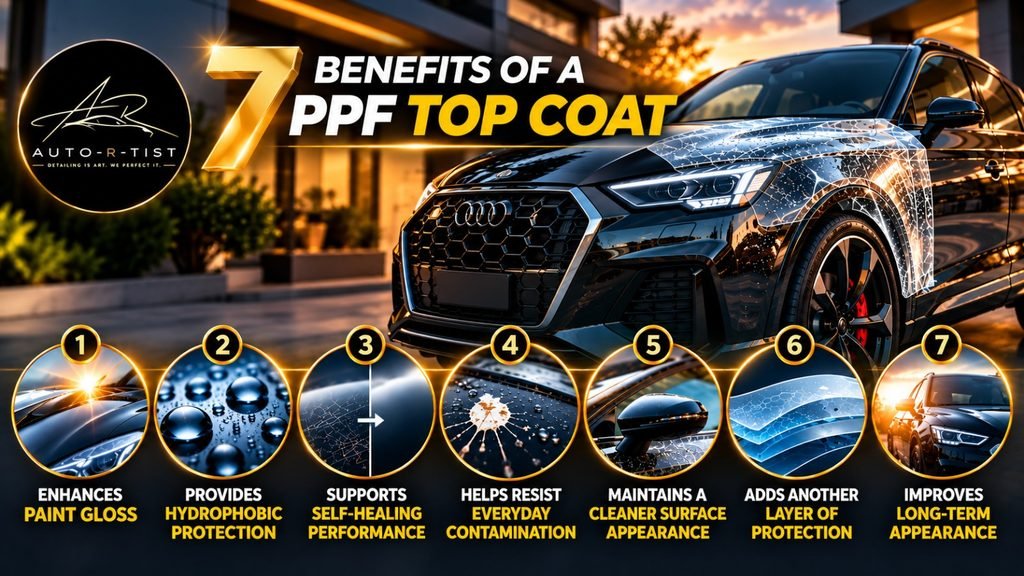
7 Benefits of a PPF Top Coat
1. Enhances Paint Gloss
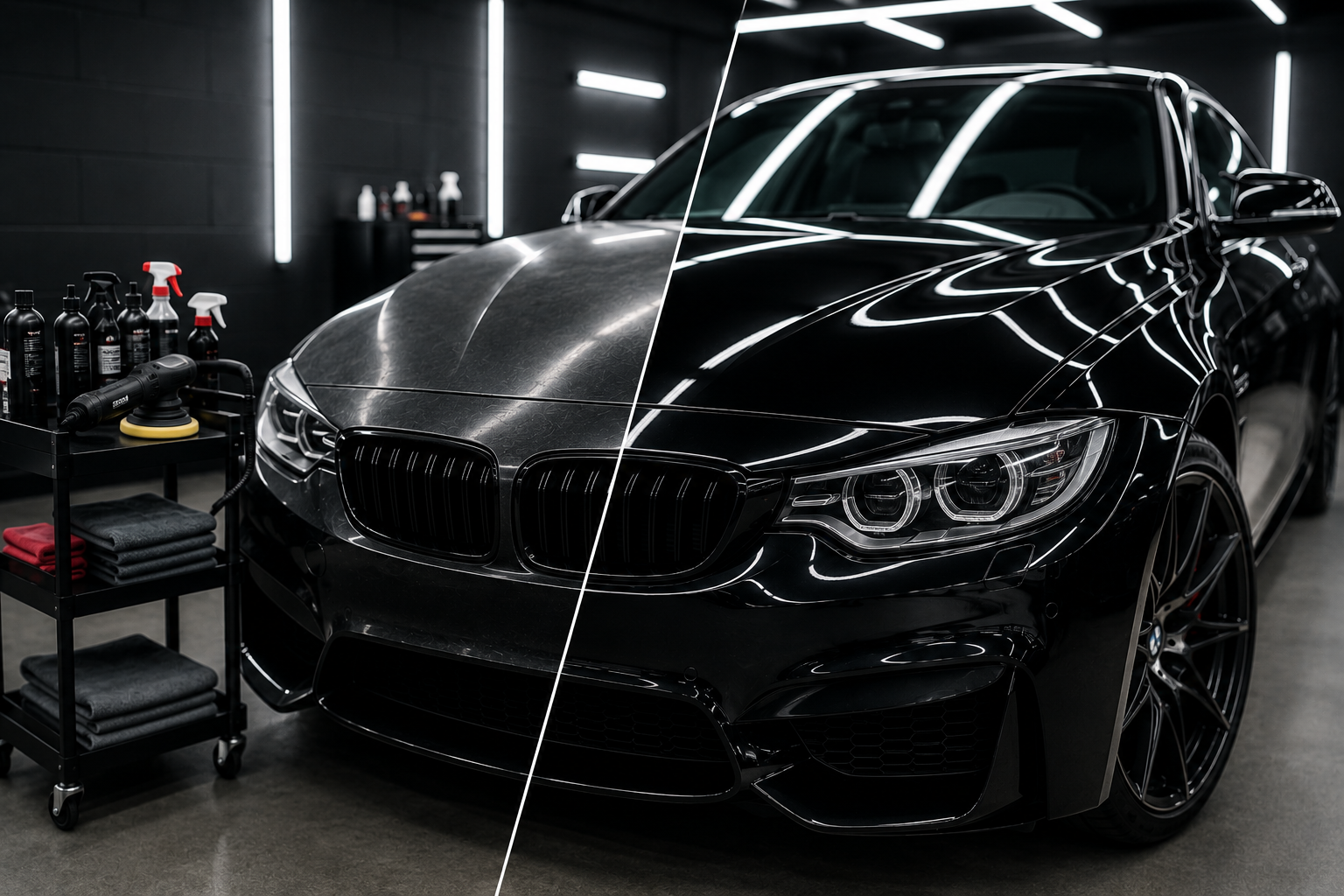
One of the most noticeable advantages of a quality PPF top coat is its ability to maintain a clean, glossy appearance.
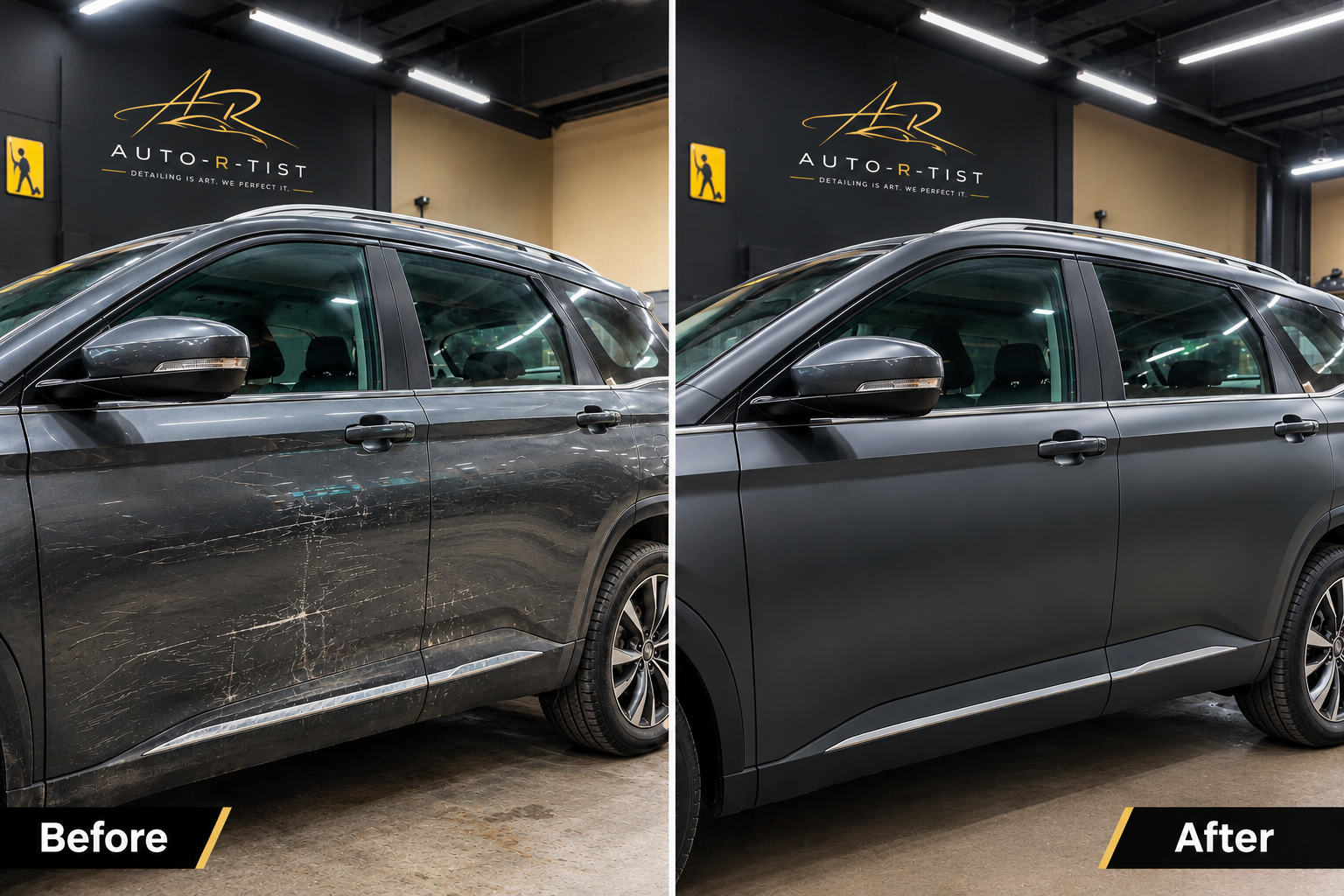
On a properly prepared vehicle, a high-quality clear PPF can create a smooth optical finish while allowing the original paint colour to remain visible. This is particularly noticeable on darker colours, where surface reflections and imperfections are easier to see.
For owners looking for gloss PPF, the top surface is an important part of the overall visual finish.
2. Provides Hydrophobic Protection
A hydrophobic PPF top coat helps water form droplets rather than spreading across the surface.
This can make rainwater and washing water easier to remove. Because water carries dust and contaminants with it, good water behaviour can also make routine vehicle maintenance more convenient.
However, hydrophobic performance can change over time depending on washing methods, environmental exposure and the products used during maintenance.
3. Supports Self-Healing Performance
Some premium PPF products use a self-healing top coat designed to reduce the appearance of certain fine surface marks when exposed to suitable heat.
For example, minor wash marks or light surface scratches may become less visible as the top layer responds to heat. This does not mean that every scratch can disappear.
Deep scratches, cuts and damage that penetrates beyond the self-healing layer generally cannot be restored through self-healing technology.
4. Helps Resist Everyday Contamination
Your car’s exterior can encounter bird droppings, insects, road grime, dust, water spots and other contaminants.
A quality top coat can provide a smoother, more resistant surface that helps reduce the tendency of contaminants to strongly bond to the film.
This makes regular cleaning easier and helps maintain the appearance of the PPF between professional detailing sessions.
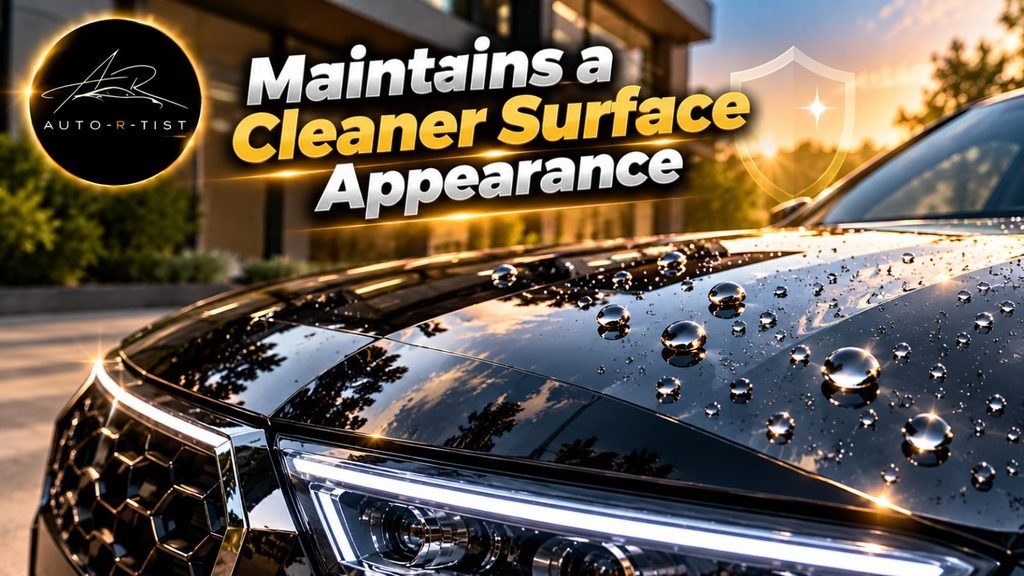
5. Maintains a Cleaner Surface Appearance
A smooth PPF surface can contribute to a cleaner-looking vehicle by reducing the visual impact of accumulated dirt and minor surface contamination.
This is especially useful for vehicles that are driven frequently in urban environments, where dust, traffic pollution and road grime can quickly affect the exterior.
Proper maintenance is still essential. A PPF top coat is not a replacement for regular washing and correct detailing practices.
6. Adds Another Layer of Surface Protection
The primary purpose of PPF is to protect painted surfaces from physical road hazards such as stone chips, light abrasions and road debris.
The top coat complements the film by protecting its exposed surface and helping it maintain its optical and functional properties.
This combination of physical paint protection and surface technology is what makes modern PPF different from a simple transparent vinyl layer.
7. Improves Long-Term Appearance
A PPF installation is not only about protecting paint today. The quality of the exposed surface can influence how the vehicle looks throughout the life of the film.
A well-maintained top coat can help preserve:
- Surface clarity
- Gloss
- Water behaviour
- Resistance to everyday contamination
- Overall visual finish
For this reason, PPF top coat technology should be considered when comparing different Paint Protection Film options.
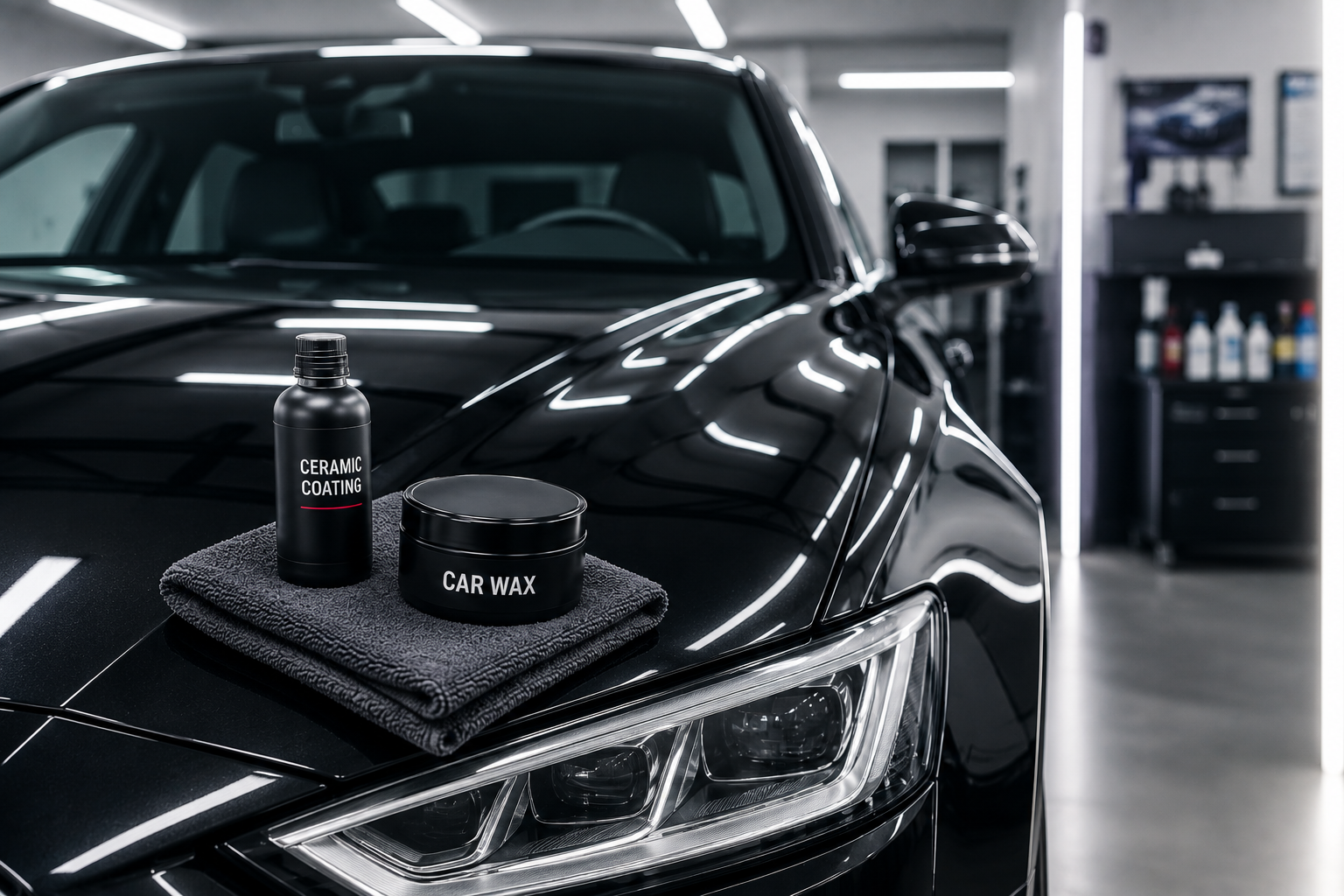
PPF Top Coat vs Ceramic Coating
PPF and ceramic coating serve different purposes.
PPF primarily provides a physical protective layer over the paint. It is designed to help protect vulnerable painted surfaces from road debris, stone chips and certain types of physical damage.
Ceramic coating, on the other hand, creates a thin protective surface layer that can improve properties such as gloss, water behaviour and ease of cleaning.
Some vehicle owners choose to combine the two technologies. A ceramic or dedicated PPF coating may be applied over compatible PPF to enhance surface characteristics, but product compatibility and application procedures should always be checked first.
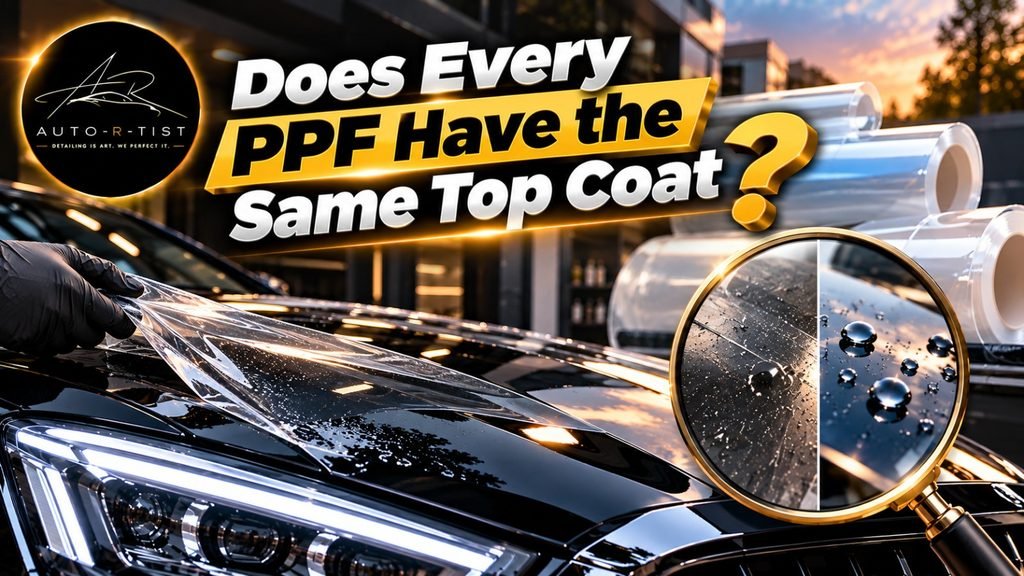
Does Every PPF Have the Same Top Coat?
No. PPF technology can vary significantly between manufacturers and product ranges.
Differences may include:
- Top-coat chemistry
- Gloss level
- Hydrophobic performance
- Self-healing characteristics
- Stain resistance
- Thickness and construction
- Warranty terms
- Recommended maintenance
Therefore, PPF price alone should not be the only factor when comparing products. Film construction, installation quality, warranty and aftercare all contribute to the overall ownership experience.
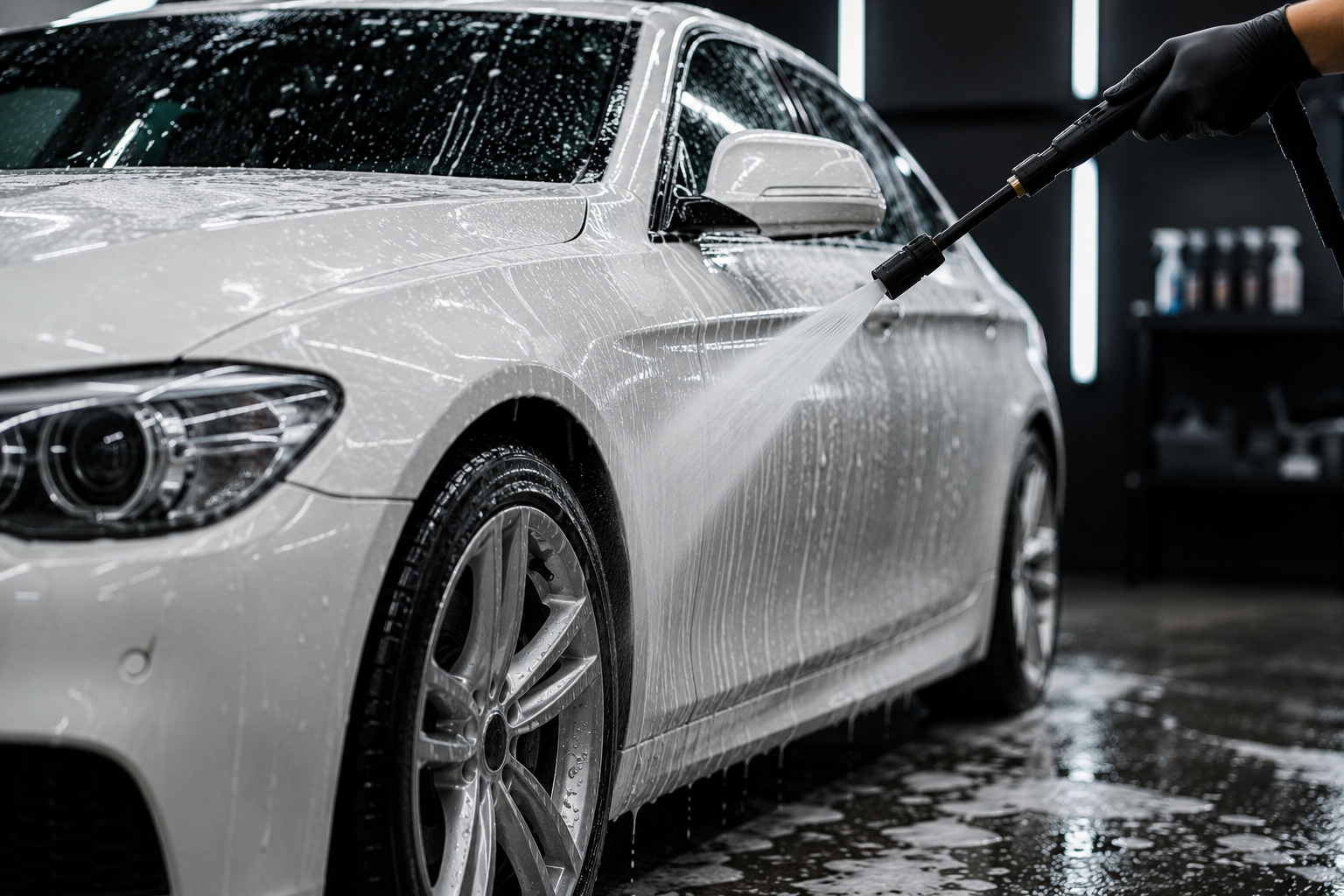
How to Maintain a PPF Top Coat
Proper maintenance helps preserve the appearance and performance of the film.
Follow these basic practices:
- Use a pH-balanced automotive shampoo.
- Avoid aggressive brushes and abrasive washing methods.
- Use clean microfiber towels.
- Remove bird droppings and insects as soon as practical.
- Avoid harsh chemicals unless they are confirmed safe for the specific PPF.
- Follow the film manufacturer’s maintenance recommendations.
- Have the film inspected if you notice lifting, damage or significant surface deterioration.
Correct washing habits are particularly important if you want to maintain the gloss and hydrophobic properties of PPF.
Choosing the Right PPF for Your Car
When selecting Paint Protection Film, look at the complete system rather than focusing on a single feature.
Consider:
- Film construction and top-coat technology
- Clarity and finish
- Self-healing characteristics
- Hydrophobic performance
- Thickness
- Warranty
- Installer experience
- Installation quality
- Aftercare support
At Auto-R-Tist, the objective is to combine quality automotive protection products with careful surface preparation and precise installation. The result should not only protect the vehicle but also maintain a clean, refined appearance.
Final Thoughts
The PPF top coat may be only one part of a Paint Protection Film, but it has a major role in the film’s surface performance. From gloss and hydrophobic behaviour to contamination resistance and self-healing characteristics, the top layer influences both appearance and everyday usability.
If you’re considering PPF for your car, don’t evaluate the film only by its thickness or price. Look at the complete construction, top-coat technology, warranty, installation process and maintenance requirements.
Auto-R-Tist provides professional automotive protection solutions with a focus on precision, surface preparation and premium finishing.
Frequently Asked Questions
What is a PPF top coat?
A PPF top coat is the outer surface layer of Paint Protection Film that helps improve gloss, water repellency, contamination resistance and overall surface performance.
Does a PPF top coat make the film self-healing?
A quality PPF can have self-healing properties, but the exact performance depends on the film’s construction and technology.
Is PPF top coat better than ceramic coating?
They serve different purposes. A PPF top coat is part of the film’s surface system, while ceramic coating is an additional coating applied over a surface.
How long does a PPF top coat last?
Its performance depends on the PPF material, installation quality, maintenance and environmental exposure.
Can I apply ceramic coating over PPF?
Yes, compatible ceramic coatings can generally be applied over PPF, but the product should be suitable for PPF surfaces.