When you shop for paint protection film (PPF) for your car, thickness is usually the first number people ask about. Films come in several levels, and you will see labels such as 180 micron, 190 micron, 200 micron and above.
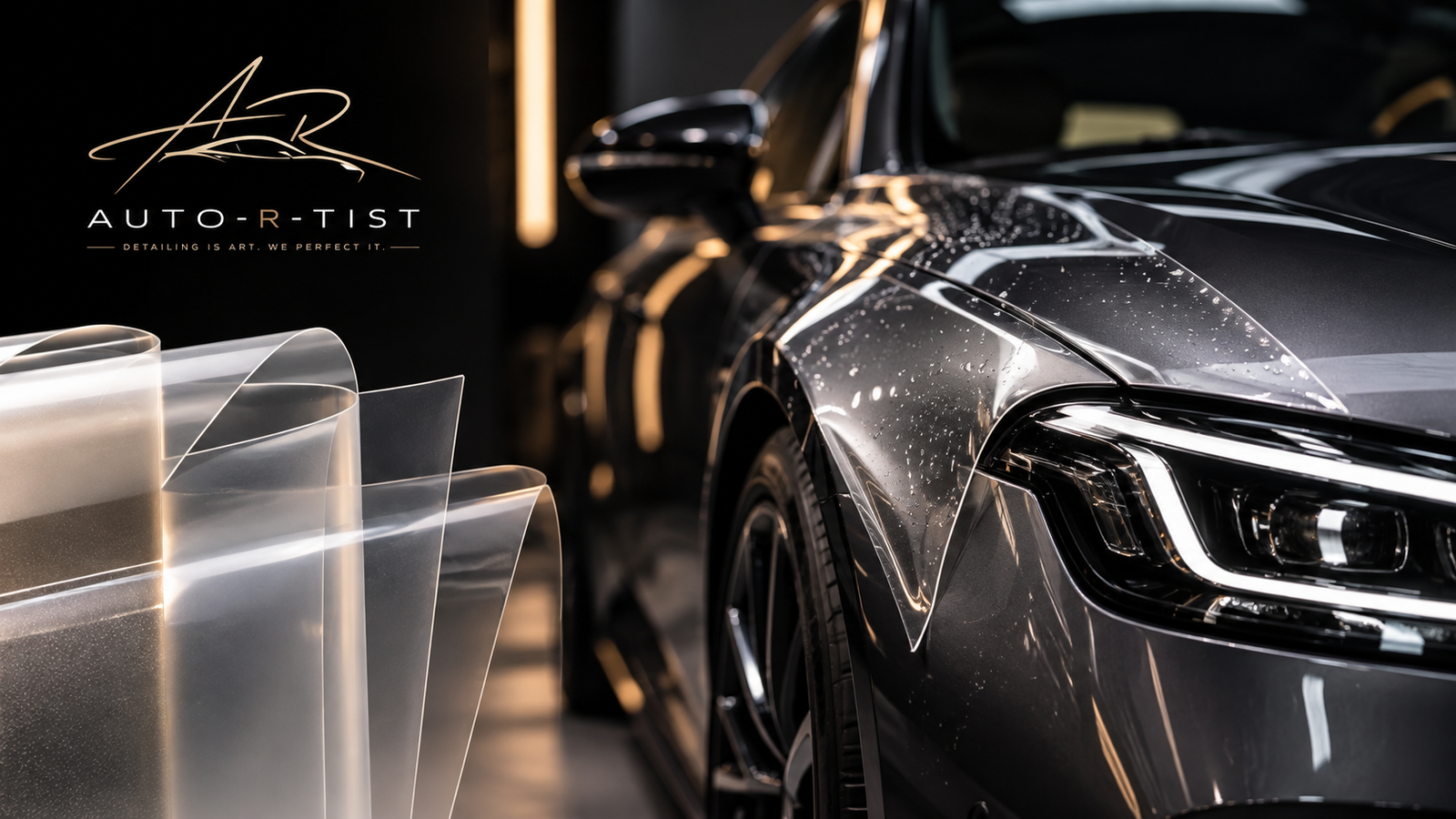
Not necessarily. While PPF thickness plays an important role in protection, a higher micron count alone does not determine the overall performance of the film.
Factors such as TPU quality, top-coat technology, self-healing capability, flexibility, adhesive strength, durability, and installation quality can also have a significant impact on how well the PPF performs.
At Auto-R-Tist, we focus on these factors together to help car owners understand the differences between PPF options and choose a film that offers the right balance of protection, appearance, durability, and performance.
What Does the Thickness Number Mean?
It is the physical thickness of the film, normally quoted in microns (µm). A micron is 0.001 millimetres, so a film rated at 200 microns is roughly 0.20 mm thick.
When comparing PPF products, it is also important to check how the manufacturer measures the thickness. Some specifications may include the adhesive layer, while others list the film and adhesive separately.
Automotive films commonly sit somewhere in the 185–200 micron range, but thickness is only one line on the spec sheet. Self-healing, hydrophobic behaviour, stain resistance, material quality and warranty differ from one product to the next.
So, when choosing PPF, don’t compare films based only on their advertised micron thickness. Consider the complete specification and the protection features offered by the film.
Why Does PPF Thickness Matter?
PPF exists to put a protective layer between the car’s factory paint and the road.
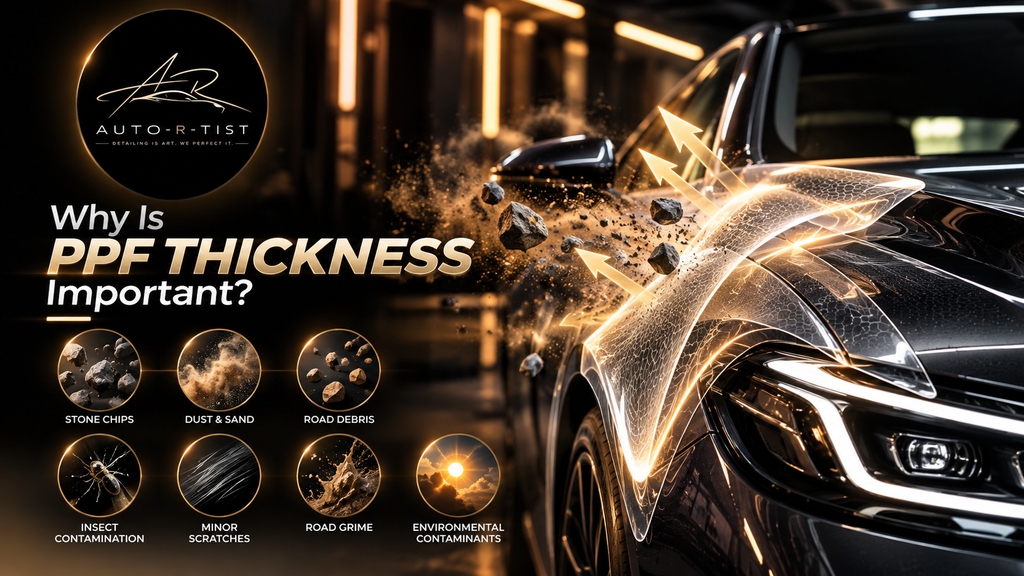
During everyday driving, your vehicle’s paint is exposed to various elements that can cause surface wear and damage, including:
- Stone chips and small road debris
- Dust, sand, and dirt particles
- Insects and other contaminants
- Minor scratches and surface marks
- Road grime and mud
- Environmental pollutants
A properly selected PPF thickness, along with the film’s overall material quality and construction, can help provide a physical barrier between these contaminants and the original paintwork.
So choosing PPF should take more than picking the biggest micron figure.
Does a Higher Micron Count Always Mean Better Protection?
No. More microns do not automatically give you better protection.
A thicker film has more material in it, but how it performs also depends on how it was designed and made.
Two PPF products with similar thickness can still differ in self-healing ability, stain resistance, clarity, hydrophobic performance, flexibility, and conformability. Therefore, thickness should be evaluated together with the film’s complete specifications rather than as a standalone feature.
What Else Should You Look at Besides Thickness?
Film Material
The film’s material has a major influence on its overall performance. Modern automotive PPF commonly uses polyurethane-based materials, including TPU.
Material quality can affect the film’s flexibility, durability, clarity, and installation behaviour.
Top-Coat Technology
The top coat is the outermost layer of the PPF and can affect characteristics such as gloss, stain resistance, water repellency, and self-healing performance.
Certain films are designed with self-healing properties that can help reduce the appearance of minor surface marks when exposed to suitable heat.
Adhesive Quality
The adhesive plays an important role in how effectively the PPF bonds to the vehicle’s surface. A quality adhesive should provide a secure bond while allowing the installer to position and apply the film correctly.
It is also important to check whether the manufacturer includes the adhesive layer in its stated micron thickness, as measurement methods can vary between products.
Flexibility and Conformability
Film has to wrap curved, complicated areas such as bumpers, mirrors, bonnet edges, fenders and other contoured panels.
A flexible and conformable film can make installation easier and help achieve smooth, consistent coverage with a clean finish.
So What Is a Sensible Thickness for a Car?
There is no one ideal thickness for every vehicle.
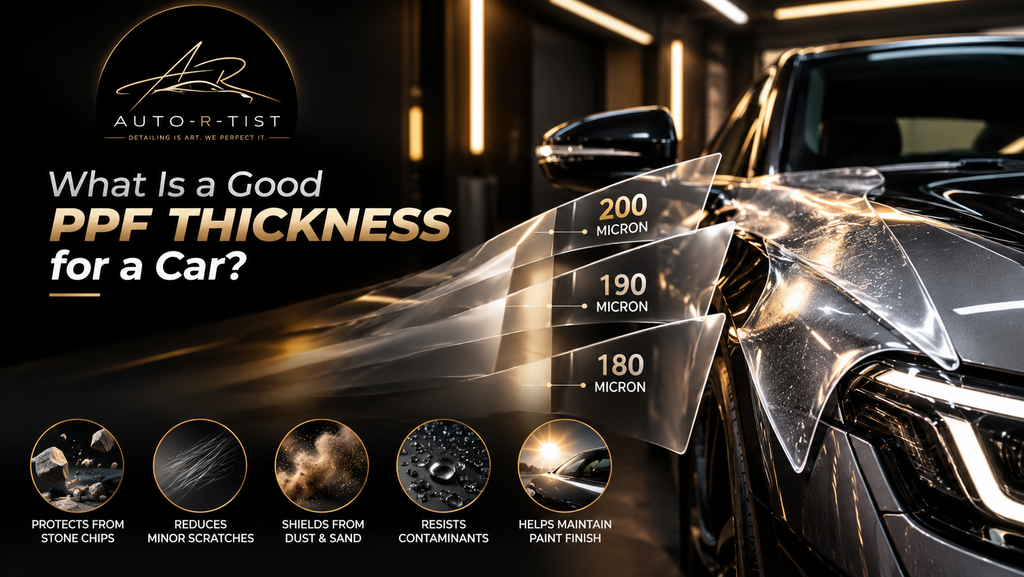
Many automotive films fall between about 180 and 200+ microns, and the exact figure depends on the manufacturer and on how the product is measured.
As one example, 3M’s India PPF information lists products at approximately 185, 190 and 200 microns, each with its own mix of features and warranty period.
So rather than only asking:
“How many microns is it?”
it makes more sense to ask:
“What protection does this film deliver as a complete system?”
That question gives you a far better way of comparing products.
180, 190 and 200 Micron PPF Compared
The choice between a 180, 190 or 200 micron film should not rest on thickness alone. More microns can add to the physical barrier, yet the overall quality and performance hinge on several other factors.
When comparing different PPF options, consider:
- Thickness: adds to the film’s physical barrier.
- Material Quality: Affects flexibility, strength, and durability.
- Top-Coat Performance: Influences gloss, stain resistance, and surface behaviour.
- Self-Healing: Helps minimise the appearance of minor surface marks on applicable films.
- Optical Clarity: Helps preserve the vehicle’s original paint appearance.
- Hydrophobic Properties: Can improve water repellency and make maintenance easier.
- Adhesive Quality: Supports secure and proper bonding to the paint.
- Conformability: Helps the film adapt to curved and complex body panels.
- Warranty: shows what the manufacturer is willing to stand behind.
- Installation Quality: Plays a major role in achieving clean edges, proper coverage, and a professional finish.
Does a Thicker Film Change the Fitting?
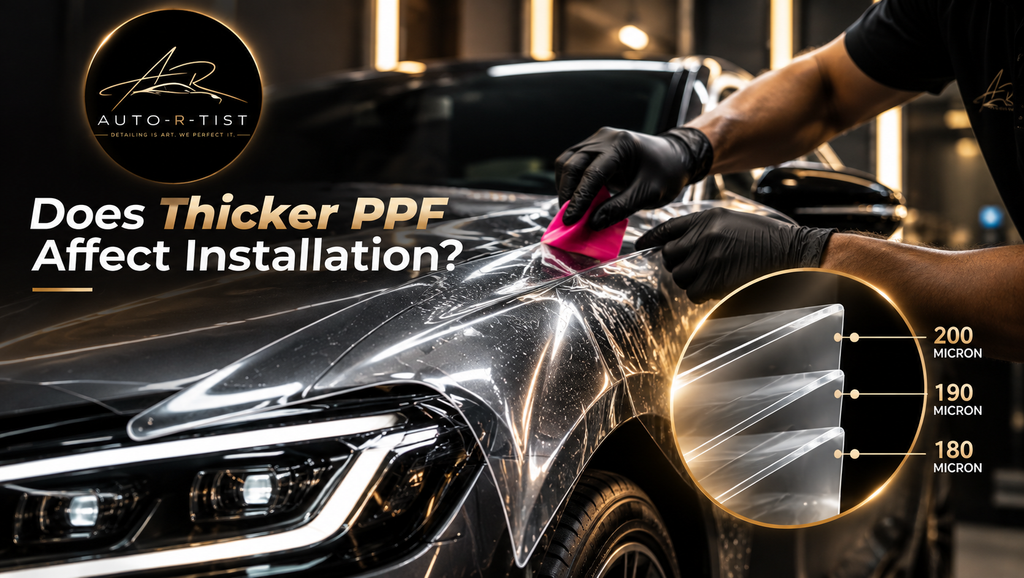
The thickness of the film can change how it behaves while being fitted.
Modern cars have curved panels, sharp edges, complex contours and hard-to-reach spots. Bumpers, ORVMs, fenders and bonnet edges all call for careful application to end up clean and even.
A professional installer must carefully position and apply the film while controlling tension and ensuring the required areas are properly covered.
Key aspects of a quality PPF installation include:
- Thorough surface preparation
- Accurate pattern selection and cutting
- Precise film positioning
- Proper handling of curved panels
- Clean and secure edge finishing
- Controlled stretching and application
- Detailed final inspection
Even a top-quality film needs good fitting to look clean and even.
What Should You Look for Before Buying PPF?
When you choose paint protection film, micron thickness is just one part of the decision. Look at the whole product, its features, its warranty and how it will be installed before you commit.
Evaluate the PPF Material
Find out what material the film is made of and how it is built. The quality of the material can affect how durable and flexible it is, and how it performs.
Confirm the PPF Thickness
Check the thickness the manufacturer states, and ask whether it includes the adhesive layer or covers the film only.
Look at Self-Healing Performance
If self-healing is an important feature for you, review the manufacturer’s specifications to understand how the technology works and what is covered under the warranty.
Examine the Top Coat
Consider features such as gloss, hydrophobic behaviour, stain resistance, surface durability, and ease of maintenance when comparing different films.
Review the Warranty
Always check the warranty period, coverage, exclusions, and conditions before purchasing the PPF. A warranty can help you understand the manufacturer’s stated expectations for the product.
Understand the Installation Process
Ask how the car will be prepared, whether pre-cut patterns are used, how the film goes on, and how the edges and awkward areas are finished.
Why Does Professional PPF Installation Matter?
The right thickness is only one step towards a good result. Preparation and fitting matter just as much.
Before the film goes on, the car should be cleaned and inspected thoroughly. Scratches, swirl marks and other paint flaws may need attention first.
During installation, accurate patterns, controlled application, and careful edge finishing help achieve consistent coverage across different body panels.
Professional installation can also help reduce issues such as:
- Uneven film application
- Poorly finished edges
- Visible lifting or lines
- Dust or contamination trapped beneath the film
- Excessive stretching
- Incomplete or inaccurate panel coverage
In short, choosing good PPF is only half the job. Proper preparation and professional installation are essential for achieving a clean, durable, and well-finished result.
Is a Higher Micron Film Worth Paying For?
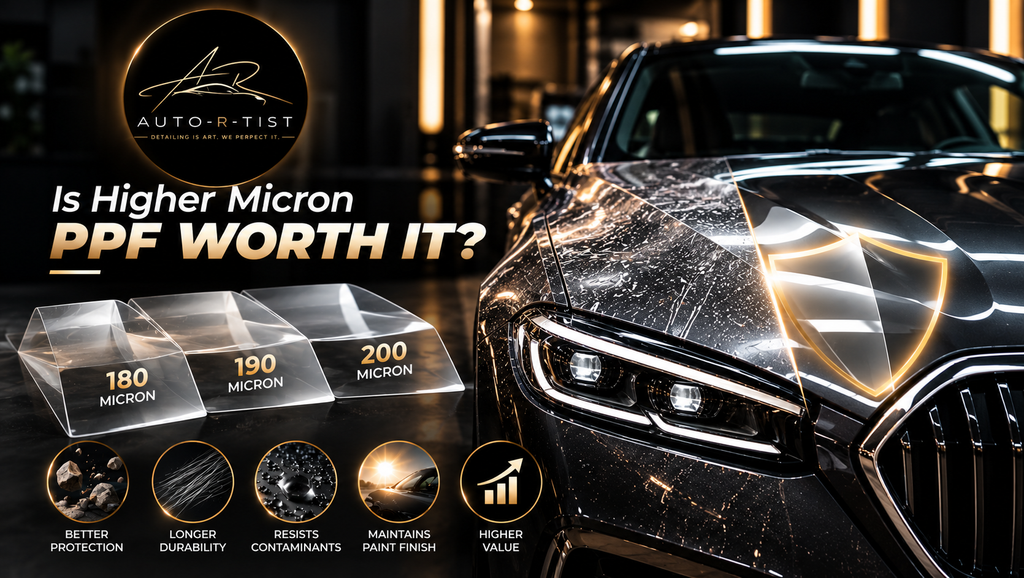
A higher micron rating can help, but weigh it alongside the rest of the specification.
Rather than buying a film just because it is the thickest, line up:
Thickness + Material + Top Coat + Adhesive + Self-Healing + Flexibility + Warranty + Fitting
Looking at the full list tells you far more about what the film can really do.
The Bottom Line on Thickness
Does a higher micron count automatically provide better protection? Not always.
Thickness matters, but it belongs alongside the film’s overall build and performance. Material quality, top-coat technology, adhesive, self-healing, clarity, flexibility and the quality of the fitting all shape the final result.
A 200-micron film is thicker than a 180-micron one, yet that alone doesn’t make it the better pick for every car.
At Auto-R-Tist, we look at PPF as a complete protection system, not a single headline figure.
When you compare paint protection films, weigh the combination of protection, technology, appearance, durability, warranty and professional installation to find the one that suits your car best.
Protect Your Car With Auto-R-Tist
Looking for professionally fitted paint protection film for your car?
At Auto-R-Tist, we offer paint protection that keeps your car’s original finish intact and its look premium.
Judge a film by its complete performance, not by the micron figure alone.
Get in touch with Auto-R-Tist to find the right PPF for your car.