Paint protection film (PPF) guards your car’s factory paint against stone chips, scratches, road debris and daily exposure. But a good film is only half of a quality job. How the edges are finished has a big effect on the final look and on how much of the panel is covered.
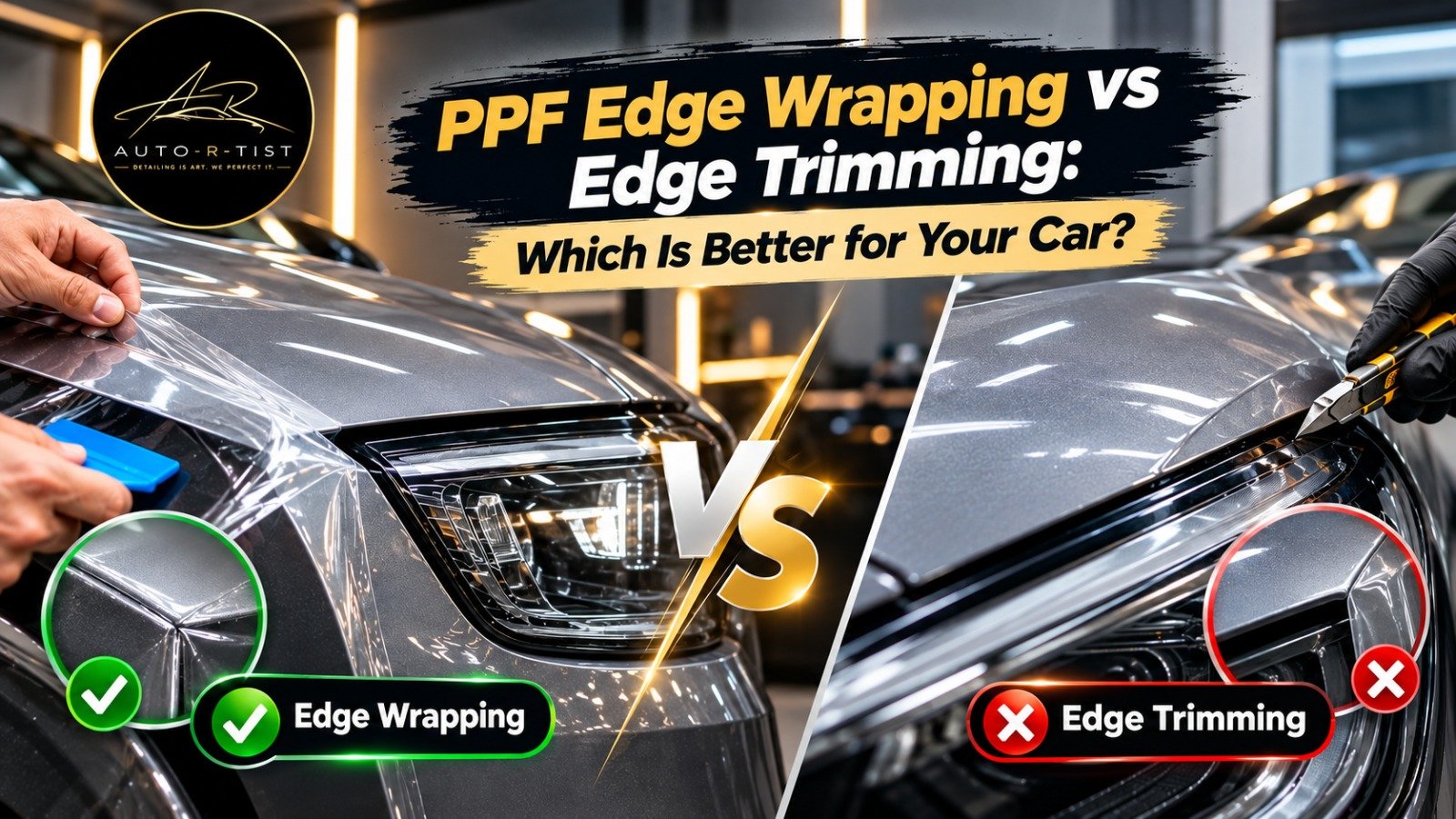
Two techniques are widely used: PPF edge wrapping and PPF edge trimming. Either can give a clean result when done properly, and the right choice depends on the shape and design of each panel.
How Does PPF Edge Wrapping Work?
With edge wrapping, the film is cut slightly larger than the panel and folded around the edge, rather than stopping at the visible line.
It is then secured on the hidden side wherever the panel leaves enough room. That makes the edge of the film harder to spot and gives the finish a more seamless look.
Benefits of Edge Wrapping
- Less visible film edges
- Extra coverage around suitable edges
- Cleaner overall appearance
- Better protection for certain painted edges
- More seamless finish
However, wrapping is not suitable for every panel. Available space, panel shape, film properties, and adhesion must all be considered.
How Does PPF Edge Trimming Work?
PPF edge trimming involves carefully cutting the film along the edge of the vehicle panel.
Here the installer places the film precisely and cuts it to follow the outline and contours of the panel. It suits places where there is little access behind the edge, or where wrapping simply isn’t practical.
The quality of the result rests on accurate cutting, correct positioning and the installer’s experience.
Edge Wrapping or Edge Trimming: How They Compare
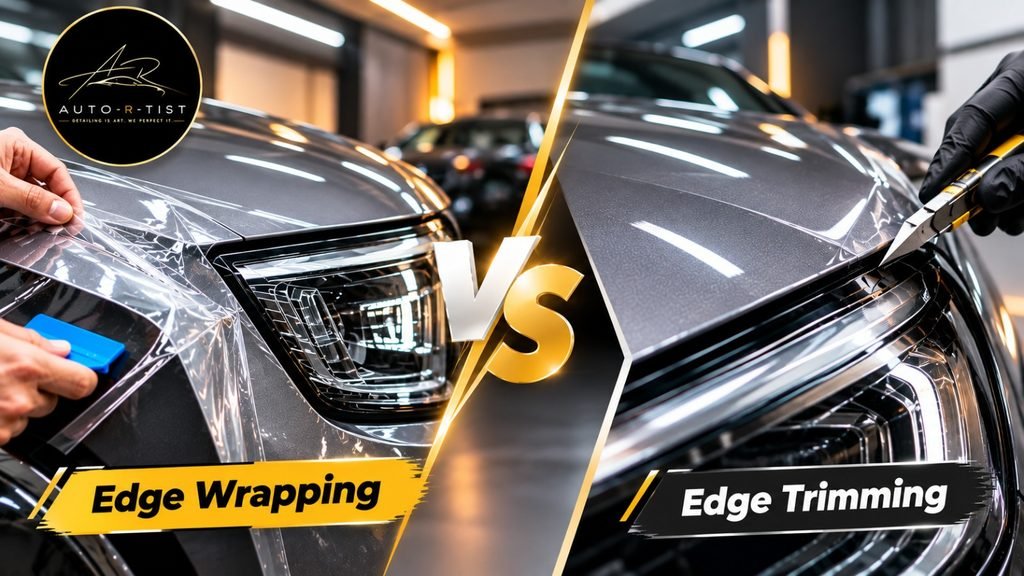
The main difference is how the film finishes at the panel edge.
| Feature | Edge Wrapping | Edge Trimming |
|---|---|---|
| Film finish | Wrapped around suitable edges | Cut along the panel edge |
| Edge visibility | Can be less noticeable | May be slightly more visible |
| Coverage | Can extend beyond the visible edge | Follows the panel boundary |
| Best suited for | Panels with enough clearance | Areas with limited access |
| Finish | Seamless where suitable | Precise and clean |
Neither method is best for every panel. A skilled installer will often use both on the same car.
Why Is PPF Edge Finishing Important?
A professional PPF installation involves more than simply applying film to the car.
Badly finished edges stand out more, and they can trap dirt and contaminants around the exposed areas.
A quality installation should include:
- Proper paint preparation
- Accurate film positioning
- Controlled stretching
- Clean edge finishing
- Proper adhesion
- Correct aftercare
These steps help achieve a cleaner and more consistent result.
Does Edge Wrapping Always Win?
No.
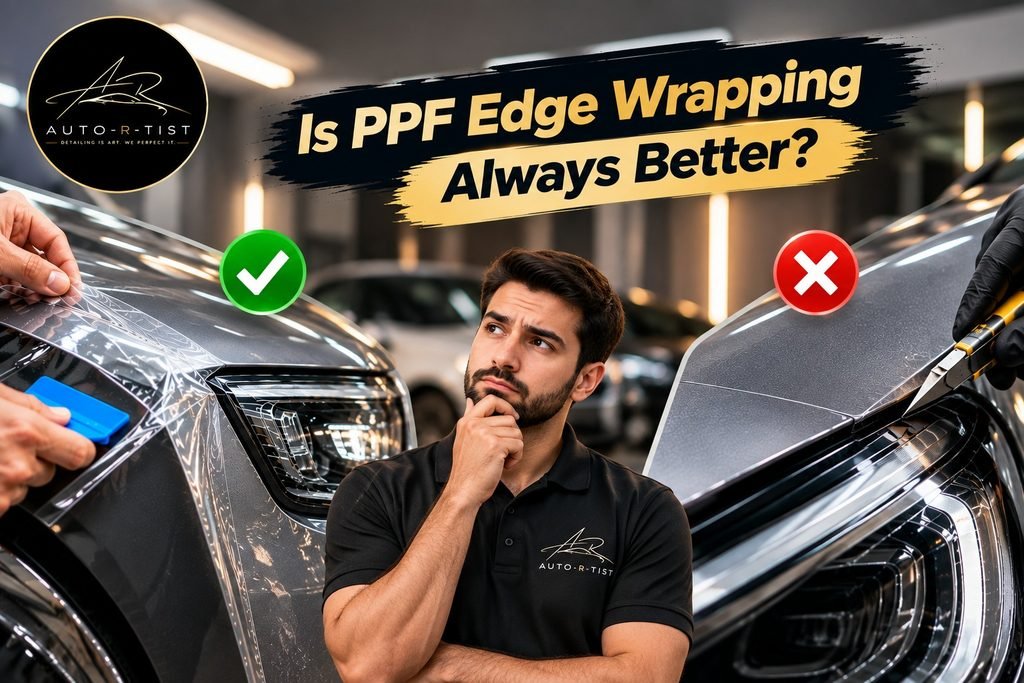
Wrapping gives excellent coverage when the panel has enough clearance and the film can be folded around without being stretched too hard.
Other panels have intricate shapes or tight access, and there a precisely trimmed edge is often the better answer.
A professional job picks the right technique panel by panel instead of using one method across the whole car.
Can Edge Trimming Harm the Paint?
Trimming is safe when the installer has the right tools and technique.
Careful cutting and handling keep unnecessary contact with the painted surface to a minimum, which is why an experienced installer matters.
Which Technique Provides Better Coverage?
How much is covered depends on the car, the panel design, the PPF pattern and the installation method.
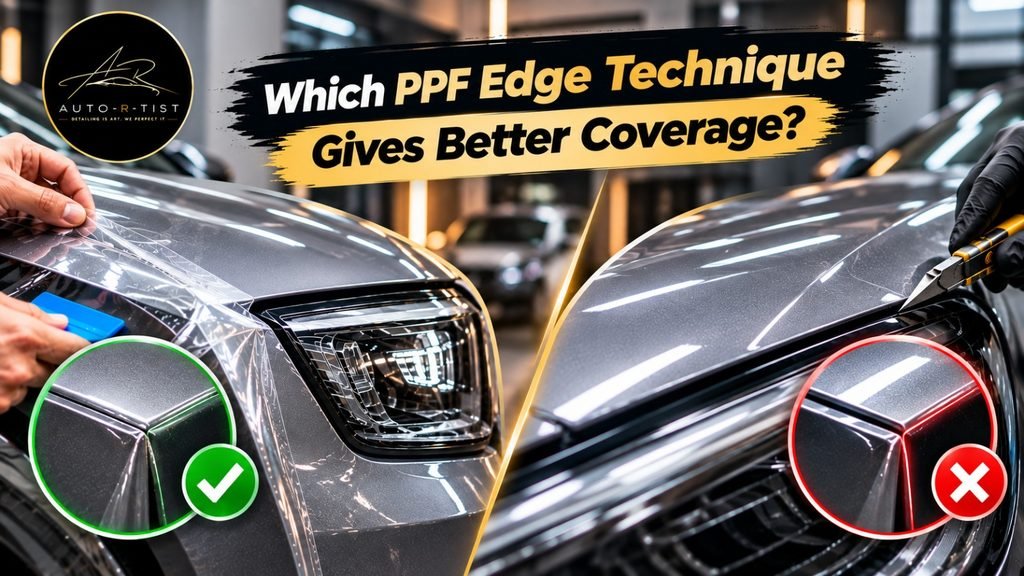
Wrapping can add coverage along suitable edges, whereas trimming gives controlled coverage right up to the panel boundary.
For this reason, an experienced installer may use wrapping on one panel and trimming on another.
What Should You Check Before Choosing a PPF Installer?
Don’t compare installers only by price. Look at the complete installation process, including:
- PPF quality and thickness
- Self-healing technology
- Warranty
- Paint preparation
- Panel coverage
- Edge finishing
- Installation experience
- Aftercare support
A high-quality film matters, but the installation has just as big an effect on how the finished car looks and how much of it is covered.
PPF Installation at Auto-R-Tist
At Auto-R-Tist, we look after both the protection and the overall finish of the car.
We choose the edge-finishing method for each area according to the panel design and the clearance available. The goal is clean coverage, tidy edges and a professional look.
If you are looking for PPF installation in Hyderabad, knowing how edge wrapping differs from edge trimming helps you judge the quality of a studio’s work.

Frequently Asked Questions
How do edge wrapping and edge trimming differ?
Wrapping carries the film around a suitable panel edge. Trimming cuts the film to follow the panel boundary.
Which is better, wrapping or trimming?
Not always. Wrapping adds coverage where the panel allows it, and trimming works on panels where wrapping would be difficult or impractical.
Can both techniques be used on one car?
Yes. Professional installers often wrap the edges of suitable panels and trim others.
Final Thoughts
The debate isn’t about crowning a winner. Each technique has a place in professional PPF installation.
The best approach is to use the right method on each panel, based on its shape, access and fitting requirements.
Thinking about PPF for your car in Hyderabad? Auto-R-Tist can walk you through the film options, coverage and how we would approach your vehicle.