Your car’s paint can lose its original gloss over time because of swirl marks, fine scratches, oxidation, water spots, bird droppings, road contaminants, and regular washing. Two popular detailing services—paint correction and ceramic coating—can help improve and protect the finish, but they serve different purposes.
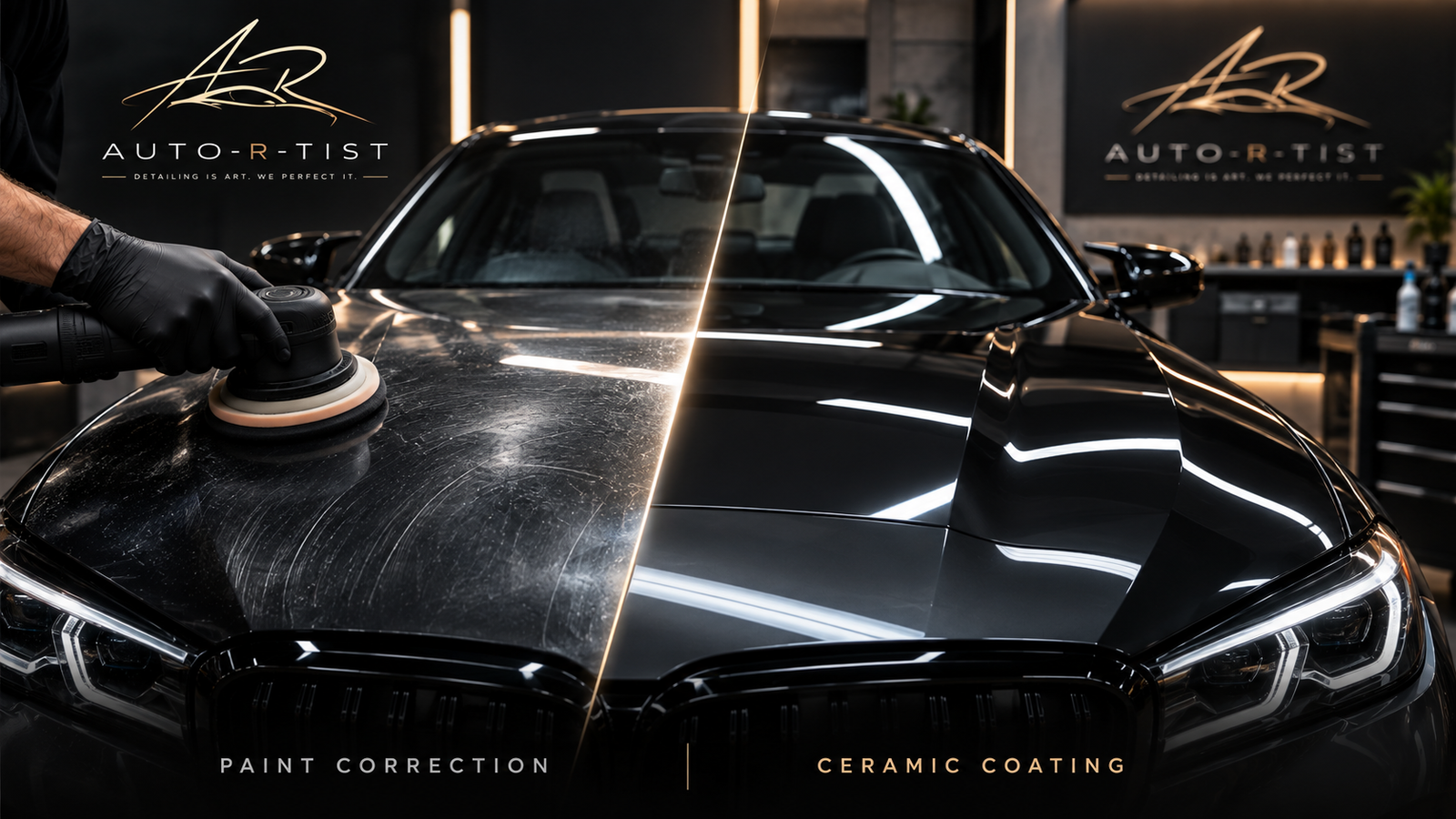
Understanding the difference between paint correction vs ceramic coating makes it easier to choose the right treatment for your vehicle. In many cases, the two services work best together rather than as alternatives.
At Auto-R-Tist, the approach starts with assessing the condition of the paint before recommending the appropriate detailing process.
What Is Paint Correction?
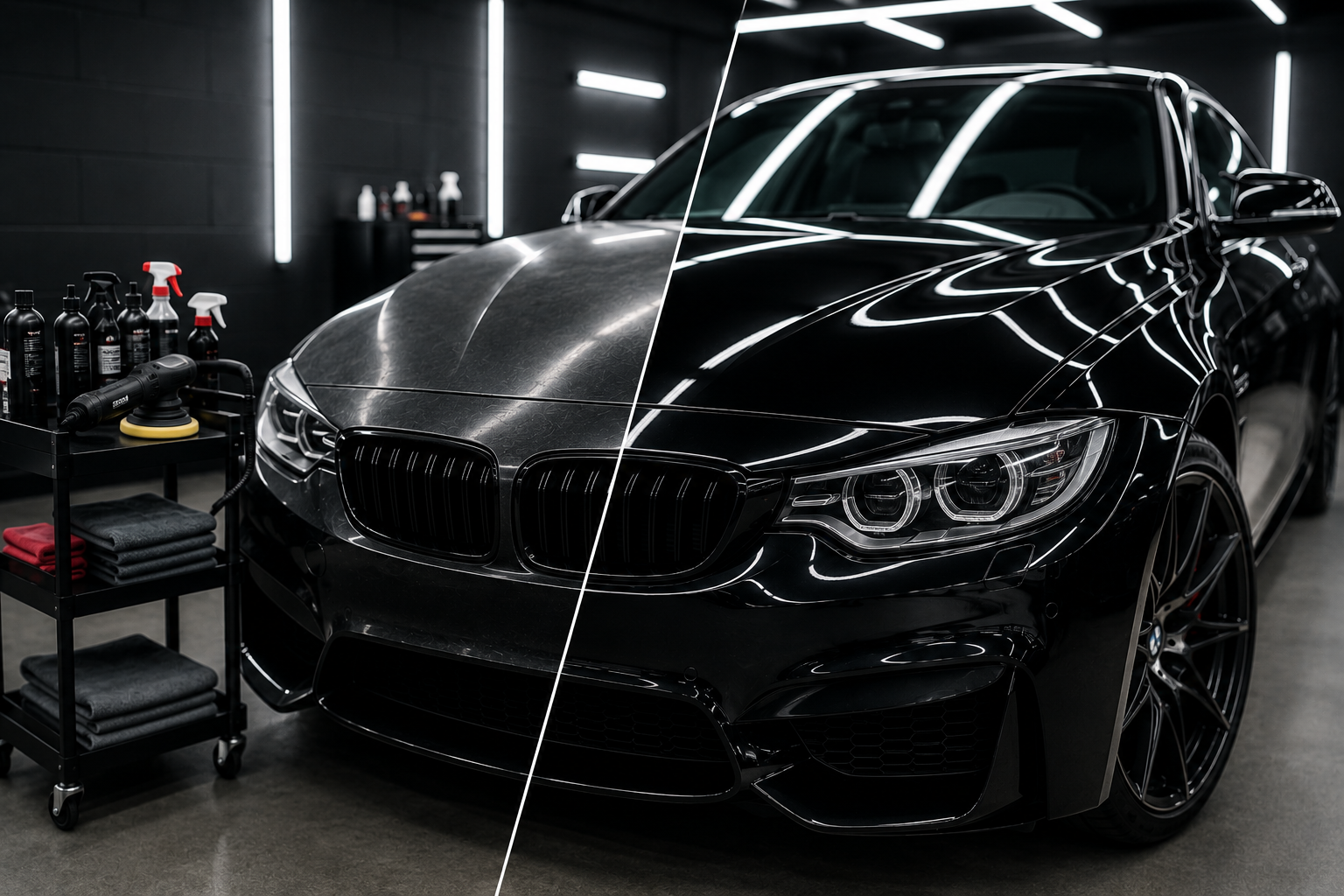
Paint correction is a machine-polishing process designed to improve the appearance of automotive paint by reducing or removing suitable surface imperfections.
Depending on the condition of the vehicle, correction can address issues such as:
- Swirl marks
- Light scratches
- Oxidation
- Paint haze
- Water marks
- Fine surface imperfections
- Dull or uneven gloss
Professional paint-finishing systems use different abrasive levels and polishing steps to refine the surface. 3M, for example, describes paint-finishing processes that can involve defect removal, compounding, polishing, refinement, and final inspection. (3M)
The main purpose of paint correction is therefore surface improvement, rather than adding a long-lasting protective coating.
What Is Ceramic Coating?
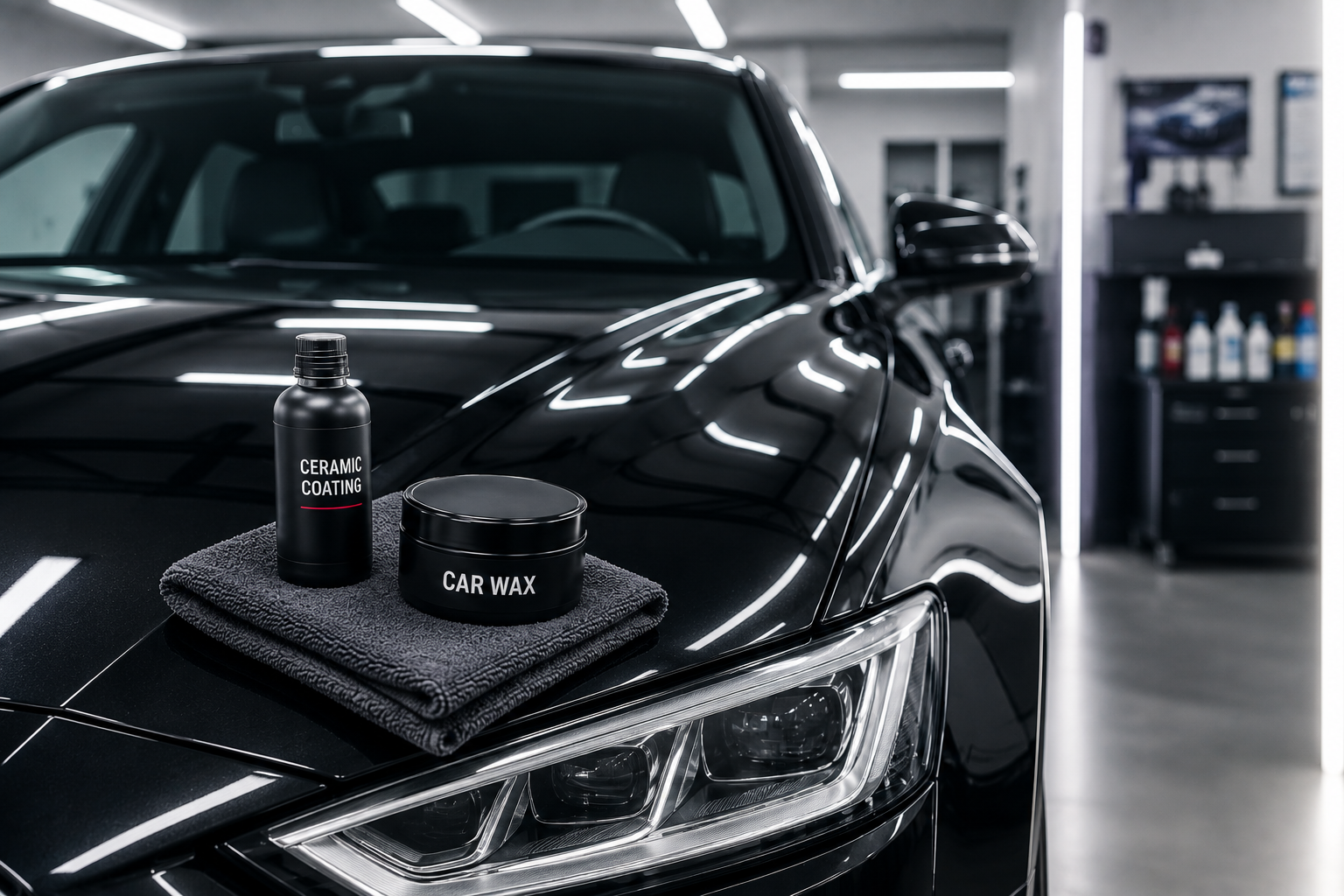
Ceramic coating is a liquid protective treatment applied to a properly prepared vehicle surface. Once cured, it creates a durable protective layer designed to improve water behavior, gloss, and resistance to certain environmental contaminants.
A ceramic coating can help provide:
- Hydrophobic water behavior
- Easier cleaning
- Enhanced gloss
- Chemical resistance
- Protection against environmental contaminants
- A smoother-feeling surface
For example, 3M describes its ceramic coating as providing a slick surface, enhanced depth and luster, water beading, and resistance to contaminants such as acid rain and road salts. (3M)
However, ceramic coating does not work like a scratch-removal process. It protects and enhances the surface; it does not automatically correct existing paint defects.
Paint Correction vs Ceramic Coating: What’s the Difference?
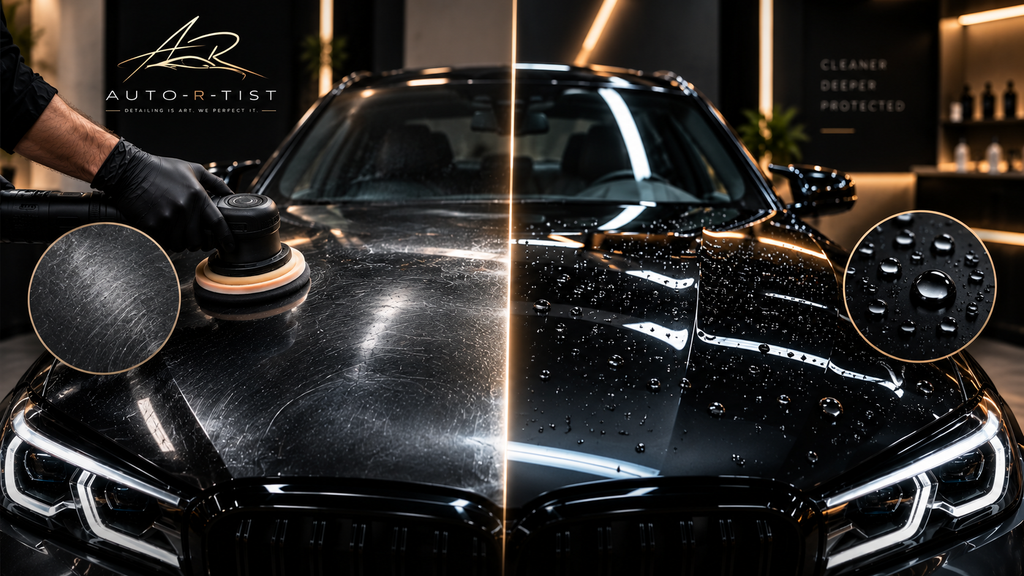
The simplest way to understand the difference is:
Paint correction improves the paint. Ceramic coating protects and enhances the prepared surface.
| Paint Correction | Ceramic Coating |
|---|---|
| Focuses on paint defects | Focuses on surface protection |
| Reduces suitable swirl marks and imperfections | Adds a protective coating layer |
| Improves clarity and gloss | Enhances gloss and water behavior |
| Uses polishing processes | Uses a liquid coating that cures |
| Primarily a preparation/finish-improvement step | Primarily a protection and maintenance step |
So, asking whether paint correction or ceramic coating is better depends on what your car actually needs.
Does Your Car Need Paint Correction?
Paint correction may be worth considering when your vehicle has visible paint imperfections that affect its appearance.
Choose Paint Correction When:
- The paint looks dull or hazy
- Swirl marks are clearly visible
- The surface has light defects
- You want to restore paint clarity
- You are preparing the vehicle for ceramic coating
If the paint is already in excellent condition, extensive correction may not be necessary. The required level of correction should depend on the actual condition of the paint and the desired finish.
Does Your Car Need Ceramic Coating?
Ceramic coating may be suitable when your priority is long-term surface protection and easier maintenance.
It can be particularly useful if you want:
- A high-gloss appearance
- Strong water-beading characteristics
- Easier removal of everyday dirt
- Additional resistance to environmental contaminants
- A more consistent maintenance routine
The performance and longevity of ceramic coating depend on the specific product, preparation, application, and maintenance. For example, 3M states that its ceramic coating can provide durability of up to five years with proper care and maintenance.
Can You Have Paint Correction and Ceramic Coating Together?
Yes. In fact, paint correction followed by ceramic coating is a common professional detailing approach.
The reason is simple: applying a coating over a surface with visible imperfections does not magically remove those imperfections. Gtechniq notes that correction can maximize gloss, clarity, and finish quality before coating, particularly when the paint has defects.
A typical process can include:
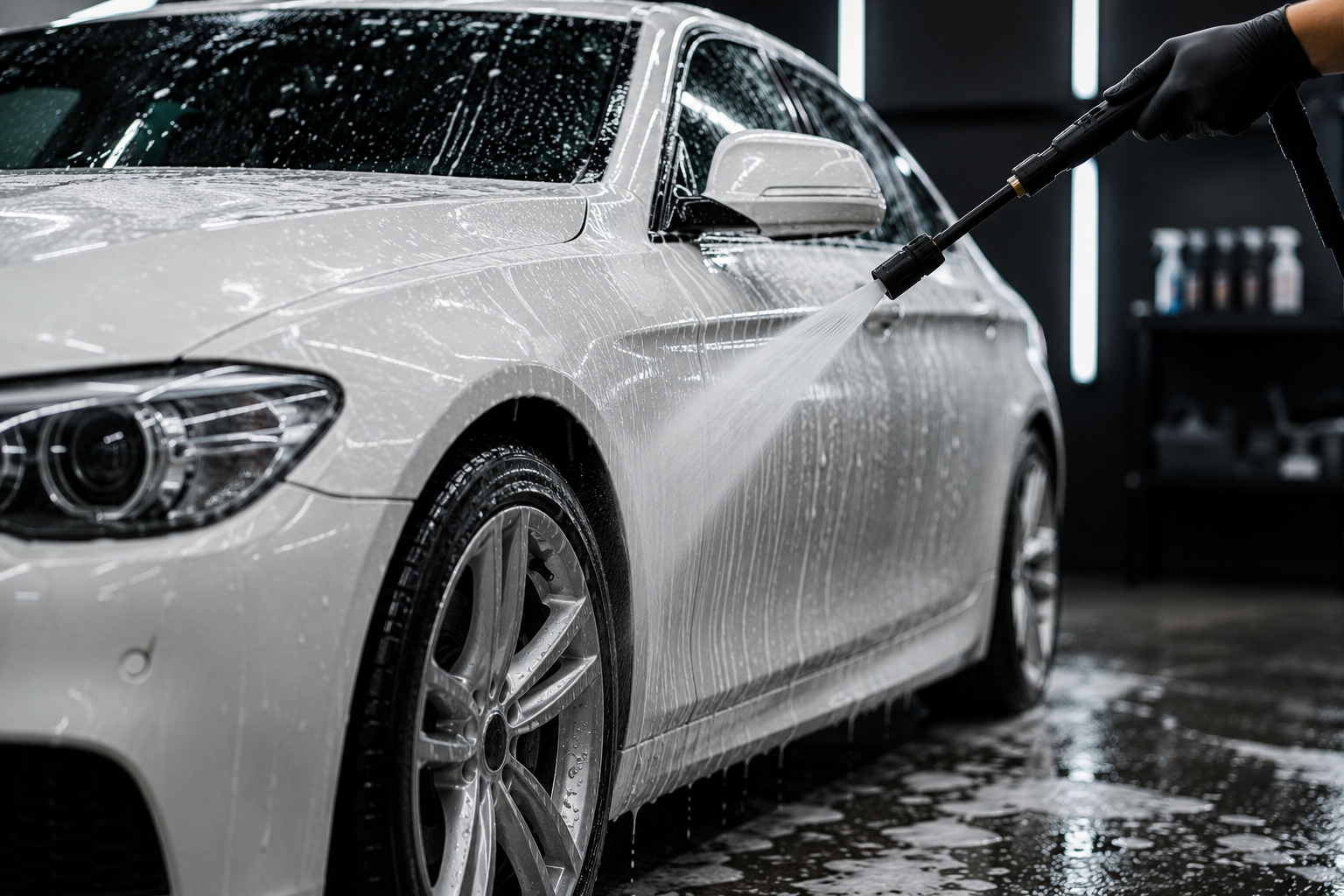
Wash → Decontamination → Paint Inspection → Paint Correction → Surface Preparation → Ceramic Coating
This allows the coating to be applied to a cleaner and more refined surface.
Can Ceramic Coating Remove Scratches?
No. Ceramic coating should not be considered a scratch-removal treatment.
If the vehicle already has swirl marks or suitable paint defects, those should be assessed and corrected before coating when appropriate. Applying a coating over imperfect paint can preserve the appearance of the surface underneath rather than correcting it.
That is why paint preparation is an important part of professional ceramic coating installation.
What If Your Car Has New Paint?
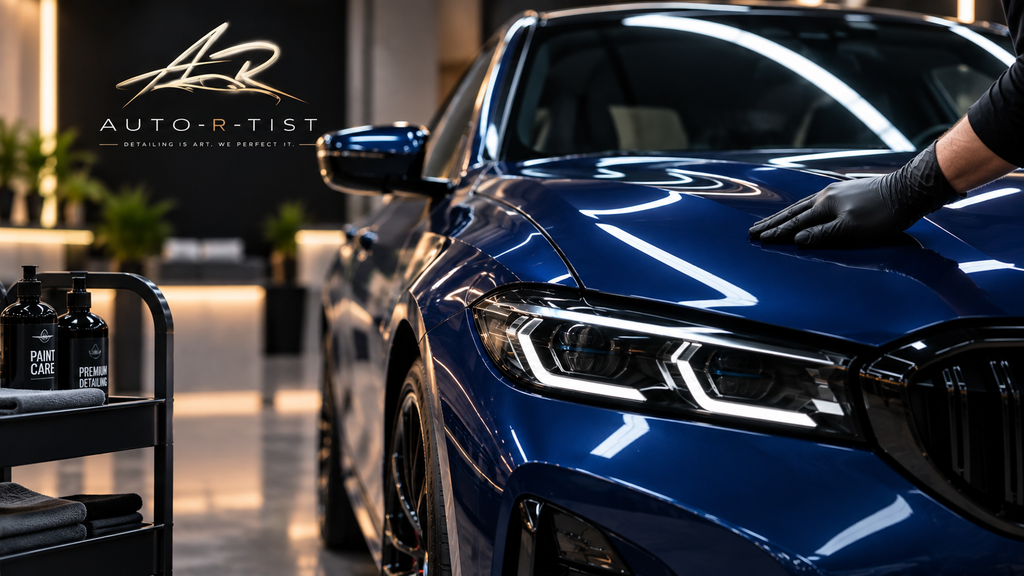
New or recently repainted vehicles require special consideration. The paint may need sufficient curing time before polishing or applying certain protective products.
A professional detailer should evaluate the paint condition and follow the paint manufacturer’s recommendations before beginning correction or coating work.
Paint Correction or Ceramic Coating: Which Comes First?
If your vehicle needs both services, paint correction generally comes before ceramic coating.
The reason is that correction is intended to refine the painted surface, while the ceramic coating is applied afterward as a protective layer.
The exact preparation process depends on the coating manufacturer and the condition of the vehicle. For example, 3M’s ceramic-coating documentation specifies application on a clean surface and provides specific preparation requirements.
Which Option Is Right for Your Car?
There is no single treatment that suits every vehicle.
If your main concern is:
- Swirl marks and paint defects → Consider paint correction
- Gloss and easier maintenance → Consider ceramic coating
- Both appearance and protection → Consider correction followed by ceramic coating
- Already excellent paint → Correction may be minimal or unnecessary before coating
The right solution depends on your car’s paint condition, age, usage, parking environment, washing habits, and your desired finish.
Professional Paint Correction and Ceramic Coating at Auto-R-Tist
At Auto-R-Tist, every vehicle can be assessed based on its existing paint condition before selecting a detailing process. Proper washing, decontamination, paint inspection, correction, and surface preparation all contribute to the final result.
Our automotive protection and detailing approach focuses on achieving a refined finish while providing the level of protection appropriate for the vehicle.
Whether you are considering paint correction, ceramic coating, or both, understanding the condition of your paint is the first step toward choosing the right service.
Final Thoughts
The difference between paint correction vs ceramic coating comes down to their primary purpose.
Paint correction is about improving the paint’s appearance, while ceramic coating is about protecting and enhancing the prepared surface. They are not necessarily competing services; when appropriate, they can complement each other.
If your car has visible swirl marks or paint imperfections, correction may be the logical first step. If the paint is already properly prepared and you want enhanced gloss, hydrophobic behavior, and easier maintenance, ceramic coating may be appropriate.
For the best result, have the vehicle inspected by a professional before deciding which treatment it needs.
Auto-R-Tist — Detailing Is Art. We Perfect It.