Introduction
A clean car interior is about more than appearance. Dust, dirt, stains, food particles, and unwanted odors can build up inside your vehicle over time, making the cabin feel unpleasant and poorly maintained. Regular interior detailing helps keep your car looking fresh, protects its interior surfaces, and creates a more comfortable environment for everyone inside.
1. Start With a Thorough Vacuum
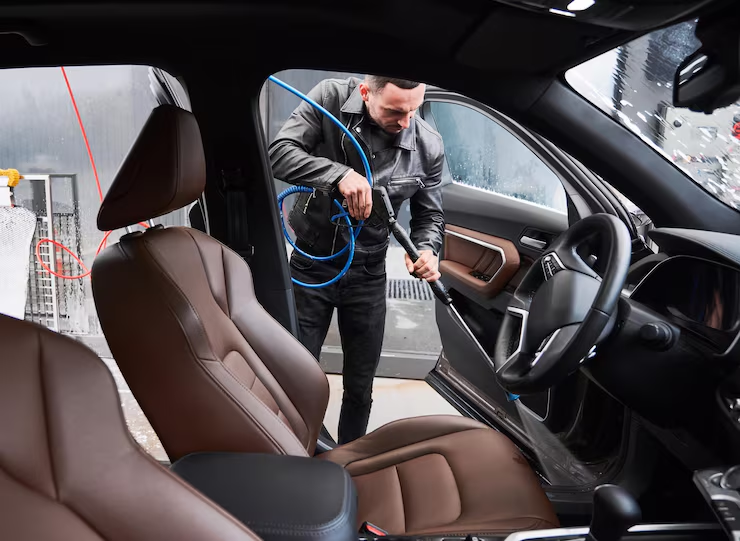
The first step in interior detailing is removing loose dirt and dust.
Pay special attention to:
- Floor mats and carpets
- Under the seats
- Seat gaps and crevices
- Dashboard edges
- Door pockets
- Trunk or boot area
Using different vacuum attachments can help reach areas that are difficult to clean by hand.
2. Clean the Dashboard and Console
The dashboard and center console collect dust quickly because they are frequently exposed to air and touched regularly.
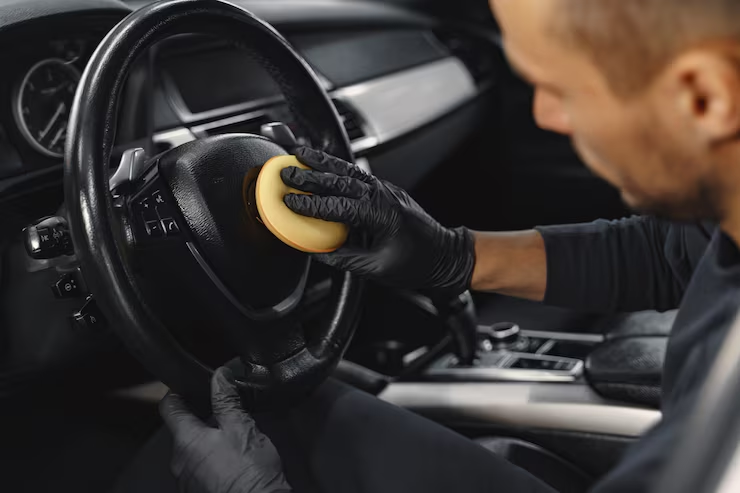
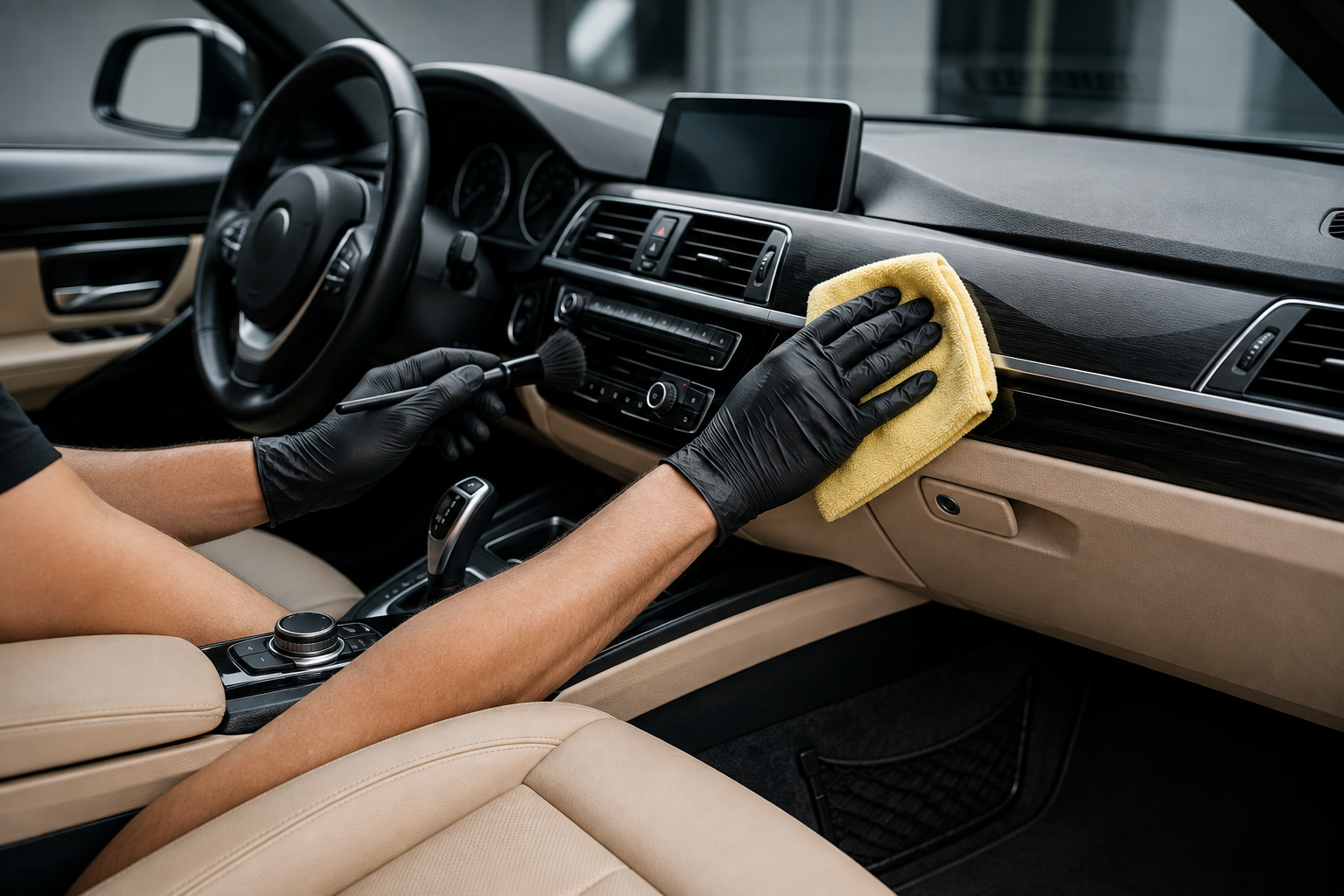
Use a soft microfiber cloth and an interior-safe cleaner to gently remove dust and fingerprints. Avoid using harsh household cleaning products, as they may damage or discolor interior materials.
3. Take Care of Your Seats
Different seat materials require different cleaning methods.
Fabric Seats
Vacuum thoroughly before using a suitable fabric or upholstery cleaner. Treat stains carefully and allow the seats to dry properly.
Leather Seats
Use a leather-safe cleaner followed by a suitable conditioner to help keep the material soft and prevent excessive drying.
Synthetic Leather
Use a mild interior cleaner and microfiber cloth to remove dirt without damaging the surface.
4. Deep Clean the Carpets and Floor Mats
Floor mats and carpets collect some of the most dirt inside a vehicle.
Remove the mats and clean them separately. Vacuum the carpet thoroughly before treating stains or heavily soiled areas. Make sure everything is completely dry before putting the mats back into the vehicle.
5. Clean the Windows and Glass
Clean interior glass regularly to remove fingerprints, dust, and haze.
Use an automotive glass cleaner and a clean microfiber towel. Cleaning the inside of the windshield is especially important because accumulated residue can reduce visibility when sunlight or headlights hit the glass.
6. Don’t Forget the Small Areas
A professional-looking interior depends on cleaning the details that are easy to overlook.
Check areas such as:
- Air vents
- Door handles
- Seat rails
- Gear selector
- Steering wheel
- Cup holders
- Seat belt areas
- Buttons and switches
Small detailing brushes can help remove dust from tight spaces without scratching delicate surfaces.
7. Remove Unwanted Odors
Bad smells can come from food, moisture, spills, pets, or accumulated dirt.
Instead of simply masking the smell with an air freshener, identify and clean the source. Deep cleaning carpets, upholstery, and other affected areas can help eliminate odors more effectively.
8. Protect Your Interior
Once the interior is clean, protection can help maintain the results.
Depending on the material, professional interior detailing may include suitable protectants for:
- Leather
- Vinyl
- Plastic
- Fabric
- Carpets
Protection can help reduce the effects of UV exposure, dirt, and everyday wear.
9. How Often Should You Detail Your Car Interior?
For everyday maintenance, vacuuming and wiping high-touch surfaces regularly can keep the cabin in good condition.
A professional interior detail every few months can provide a much deeper clean, especially if your vehicle is used frequently, carries children or pets, or is exposed to dust and pollution.
Conclusion
Keeping your car interior clean doesn’t require waiting until it becomes heavily soiled. Regular vacuuming, surface cleaning, stain removal, glass cleaning, and proper protection can help maintain a fresh and comfortable cabin.