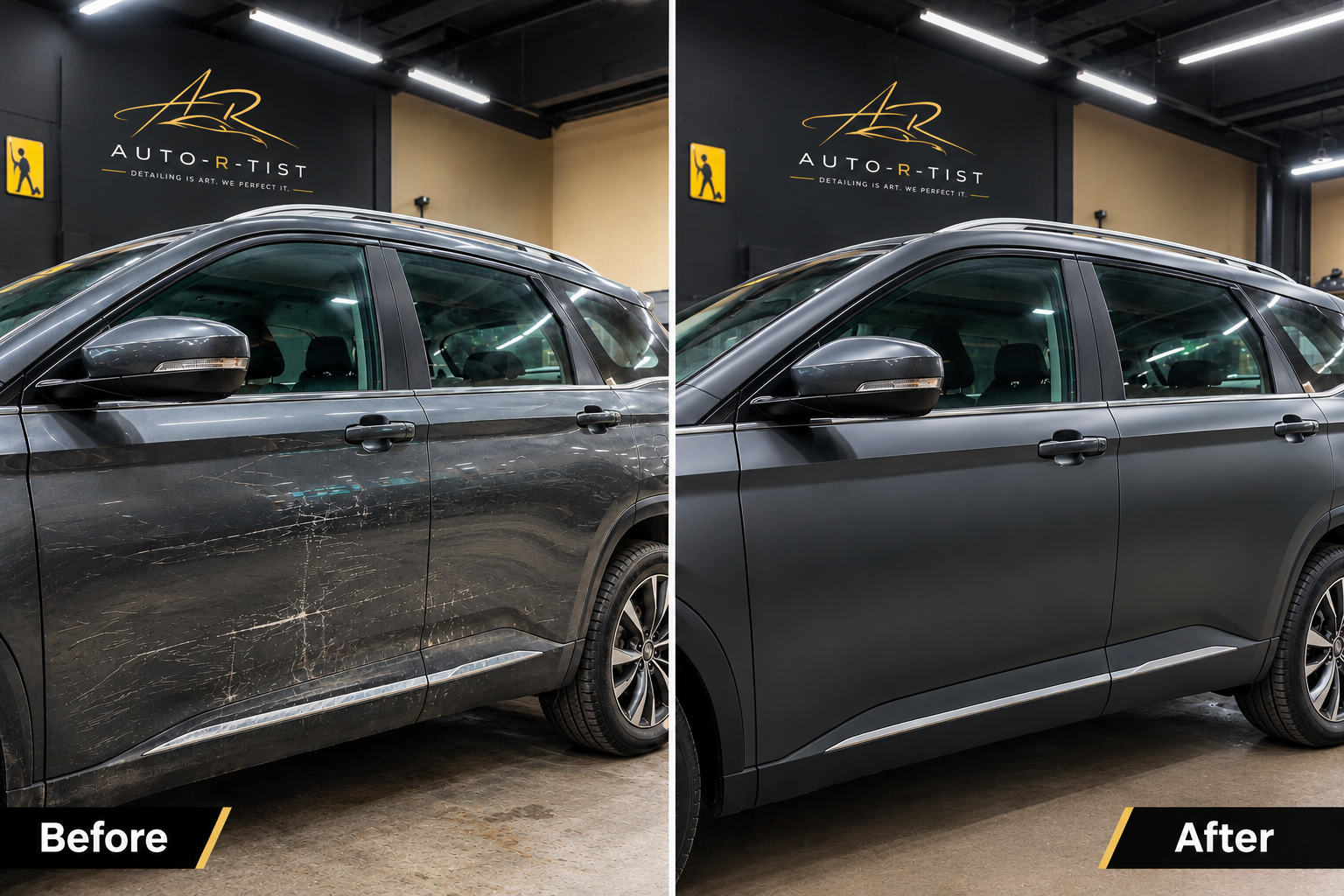
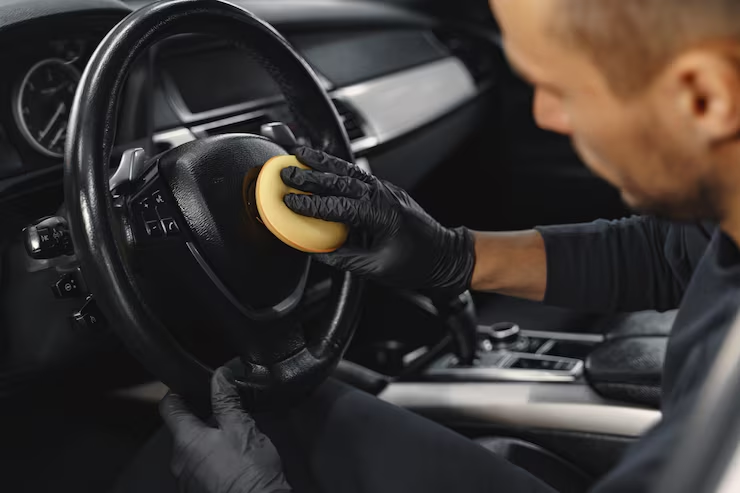
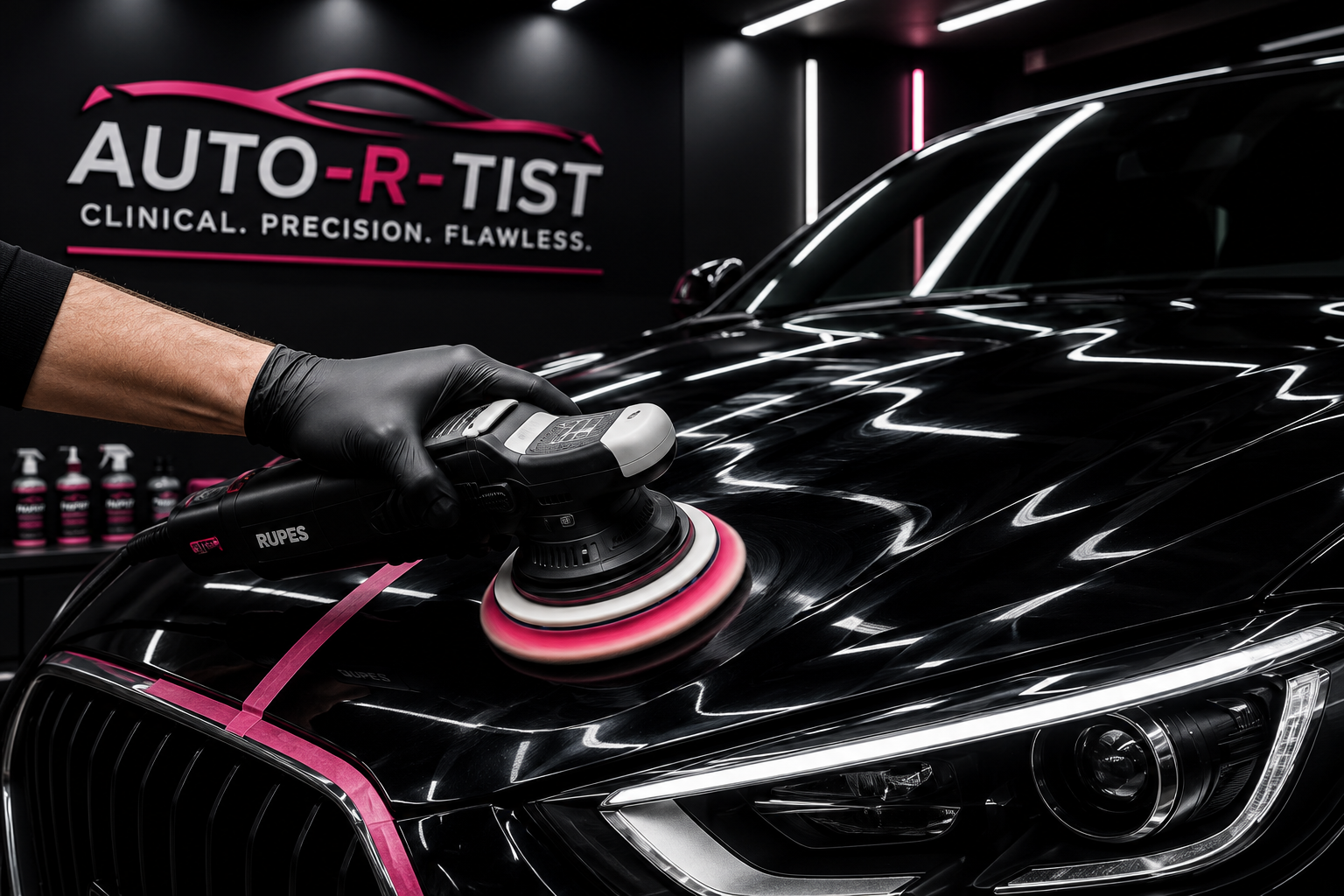
A new car looks its best when the paint is clean, glossy, and free from scratches. However, everyday driving can slowly change that appearance. Small stones, road dust, insects, weather, and minor impacts can leave marks on the paint.
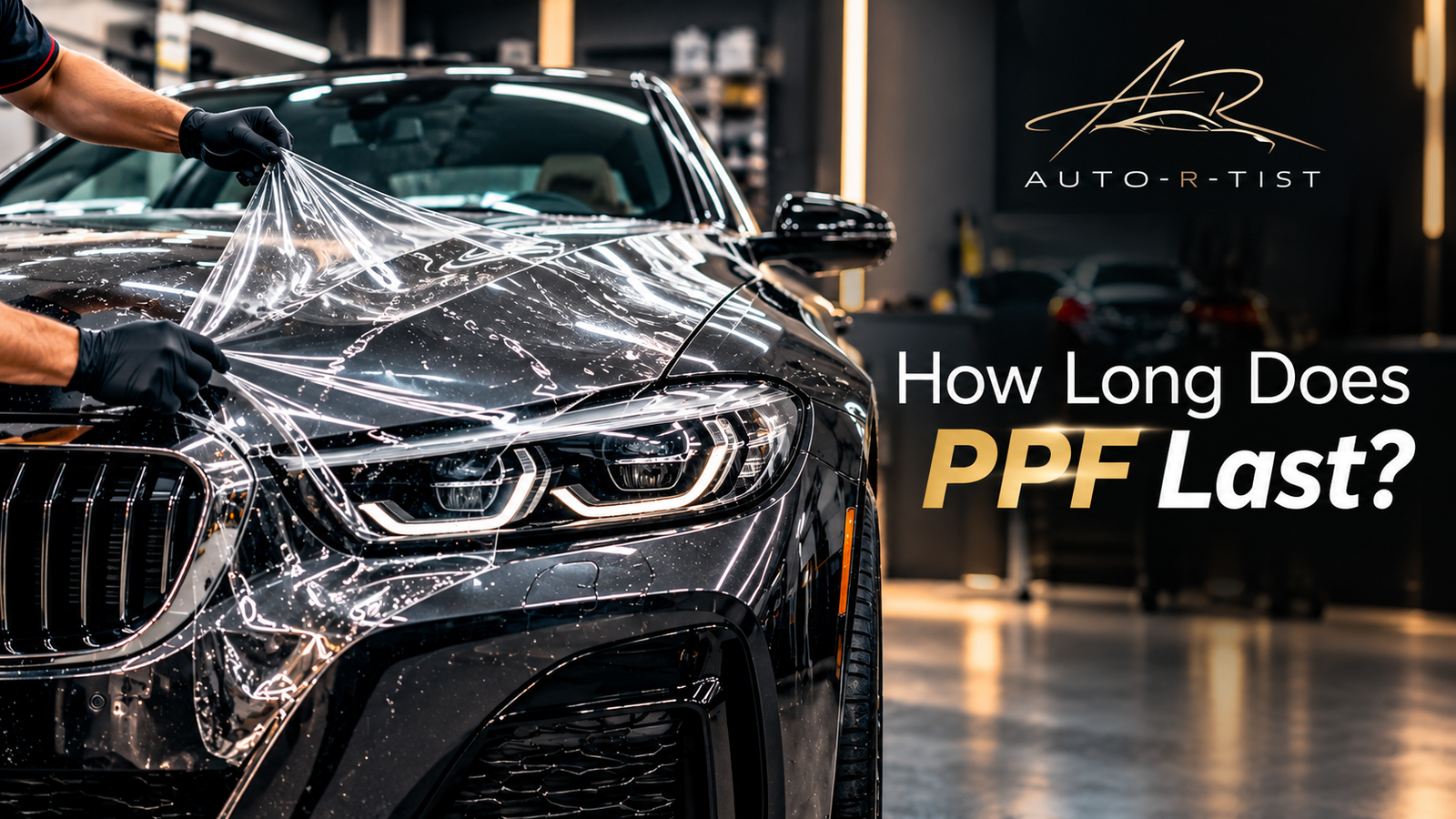
This is where Paint Protection Film (PPF) can help. PPF adds a clear protective layer over the vehicle’s paint and helps reduce everyday surface damage.
But before choosing PPF, many car owners want to know one important thing: how long does PPF last?
In most cases, a good-quality PPF can remain effective for several years. Premium films may provide protection for around 5 to 10 years, depending on the product and how the vehicle is used and maintained.
What Is Paint Protection Film?
Paint Protection Film is a thin protective material designed to cover painted areas of a vehicle. Once installed, it creates a barrier between the original paint and outside elements.
PPF is commonly installed on areas that receive more exposure, such as the front bumper, bonnet, fenders, mirrors, and doors. Some car owners choose to protect selected panels, while others prefer coverage across most of the vehicle.
A good PPF installation can help reduce the effect of:
- Small stones
- Road debris
- Minor surface scratches
- Insect residue
- Bird droppings
- Dust and environmental contaminants
- Everyday paint wear
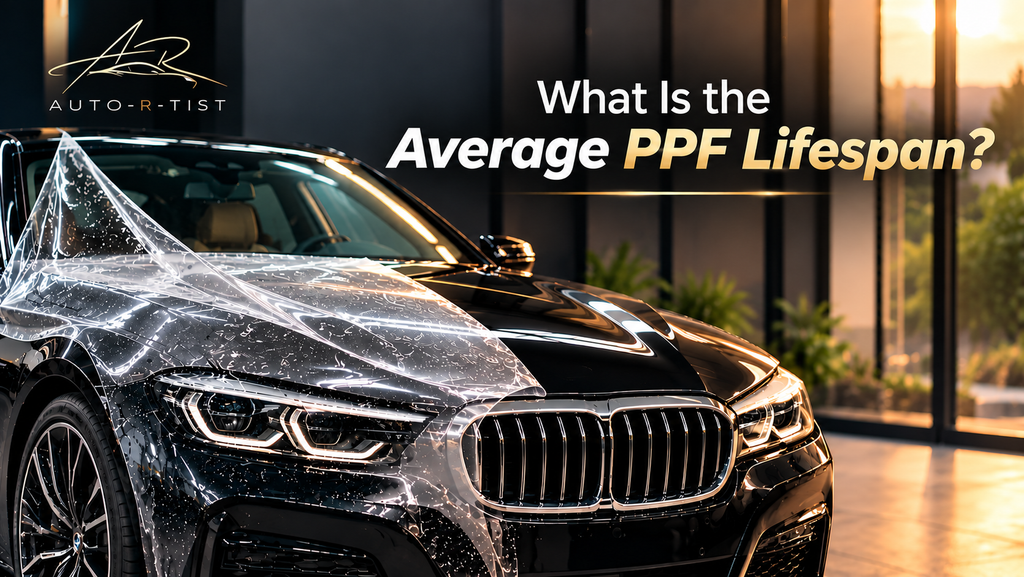
What Is the Average PPF Lifespan?
There is no single lifespan that applies to every PPF product.
As a general guide, the expected service period may look like this:
Entry-level film: Around 3 to 5 years
Mid-range quality film: Around 5 to 7 years
Premium film: Around 7 to 10 years
These figures are only general estimates. The condition of the film can vary depending on climate, vehicle usage, installation quality, and maintenance.
A premium film that is carefully maintained may remain attractive for many years, while a poorly maintained film may show ageing much sooner.
Why Does PPF Lifespan Differ From Car to Car?
Two vehicles can have the same type of PPF but experience different results.
A car that is driven occasionally and kept inside a garage has a very different environment from a vehicle that travels hundreds of kilometres every week and stays outdoors.
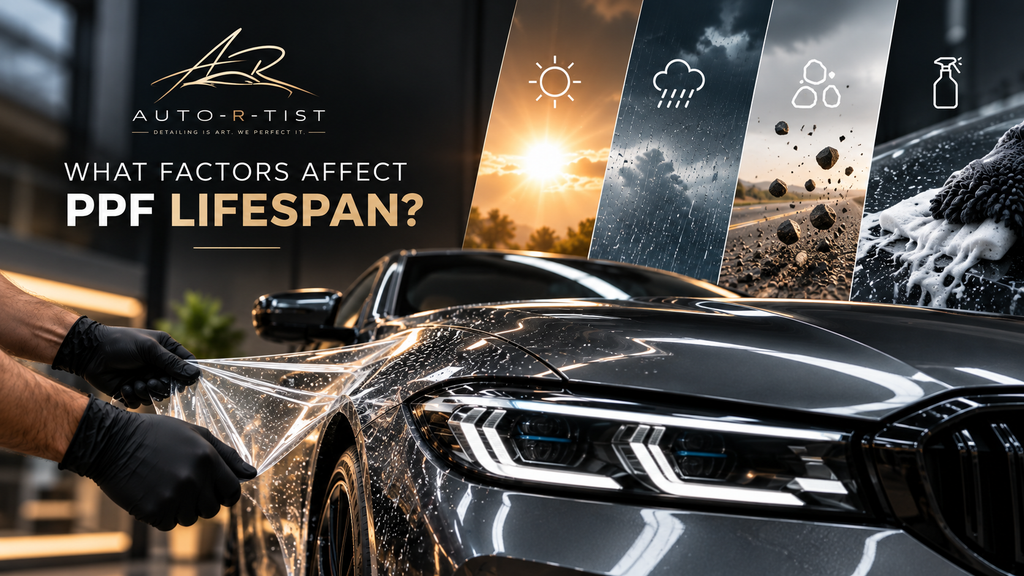
The following factors can influence the life of PPF.
1. Film Material
The material and construction of the film are important.
Higher-quality PPF is generally designed to handle regular exposure to sunlight, temperature changes, road particles, and moisture.
When comparing products, look beyond the price. Check the manufacturer’s specifications, warranty, finish, and recommended maintenance.
2. Installation
PPF installation requires careful surface preparation and accurate application.
If the installation is not done correctly, issues may appear around panel edges or beneath the film. Poor application can lead to visible bubbles, lifting, contamination, or uneven finishing.
Using an experienced installer can make a significant difference to the final appearance and durability.
3. Weather Conditions
Outdoor exposure can gradually affect any vehicle protection product.
Strong sunlight, high temperatures, rain, dust, and pollution can place additional stress on the film.
This is especially relevant for cars that remain parked outdoors for long periods.
4. Driving Habits
Your daily driving environment also matters.
Frequent highway travel can expose the front of a car to more stones and road particles. City driving may create different types of exposure, including traffic dust, pollution, and insects.
The more demanding the driving environment, the more important it becomes to protect and maintain the film properly.
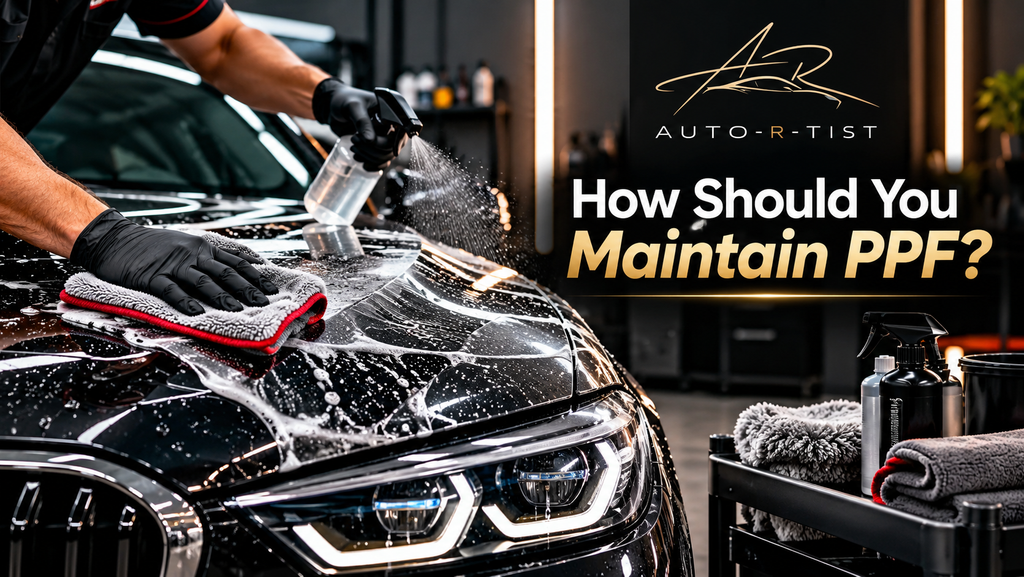
How Should You Maintain PPF?
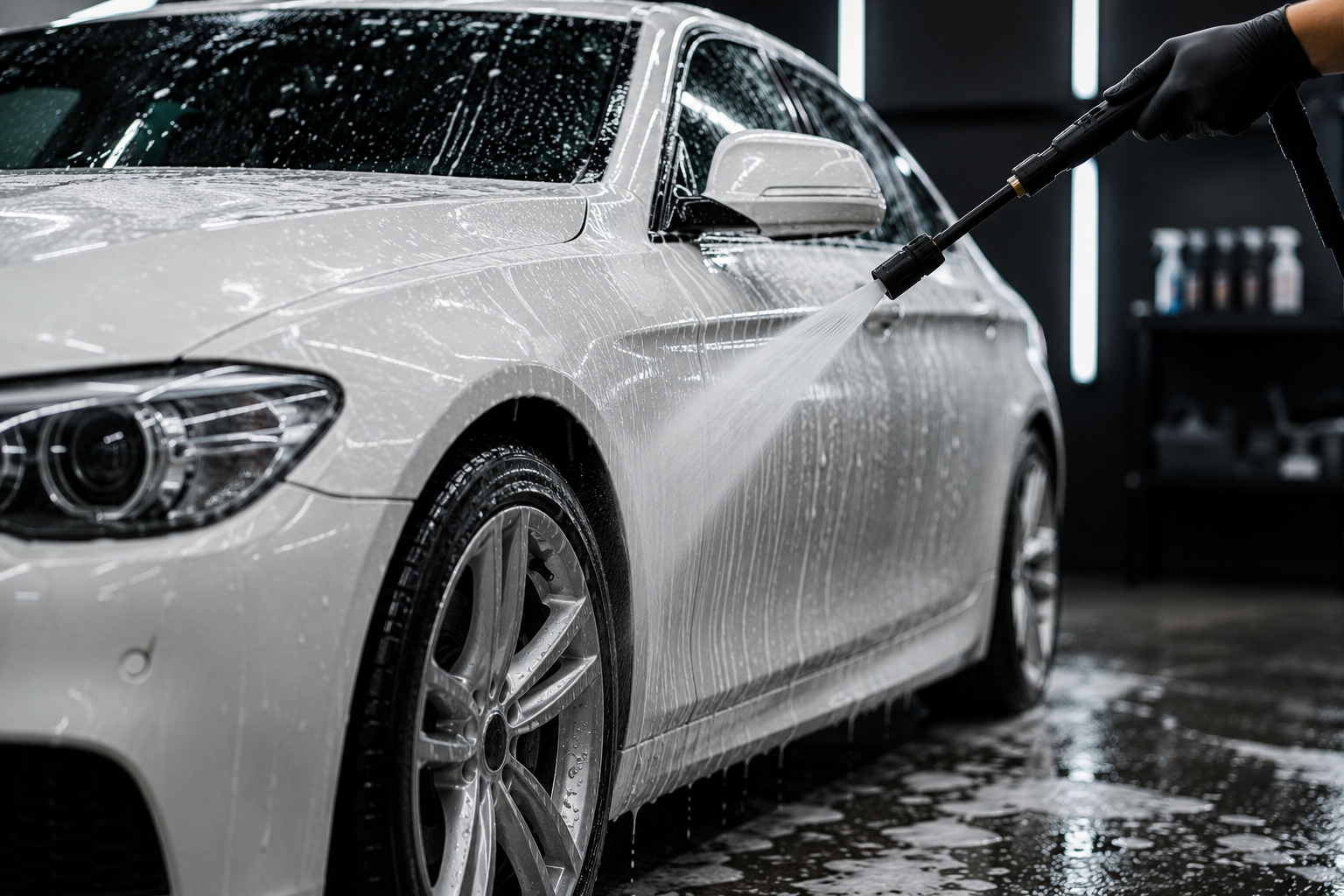
PPF does not require complicated maintenance, but the right cleaning routine can help preserve its appearance.
Wash the vehicle regularly using products recommended for use with protective films. A soft microfiber towel is preferable to rough cleaning materials.
It is also important to remove substances such as bird droppings, insects, and tree sap without leaving them on the surface for extended periods.
Avoid aggressive scrubbing and be careful when using pressure washers around the edges of the film.
Simple and consistent care can help your PPF remain clean and attractive for longer.
Does PPF Change Colour Over Time
Modern PPF is designed to maintain its appearance for an extended period, but ageing can eventually become visible.
Depending on the film and environmental exposure, an older installation may develop:
- Yellowish appearance
- Reduced clarity
- Surface marks
- Cracks
- Peeling edges
- Hazy areas
- Changes in finish
If the film starts showing these signs, it does not necessarily mean the vehicle’s paint is damaged. A professional can inspect the film and recommend whether cleaning, repair, or replacement is appropriate.
Can Damaged PPF Be Replaced?
Yes. One useful feature of PPF is that individual areas can often be replaced.
For example, the front bumper may receive more stone impacts than the roof or rear doors. If the bumper film becomes heavily damaged, that section can be replaced without necessarily removing the PPF from the rest of the vehicle.
This makes it easier to maintain protection where it is needed most.
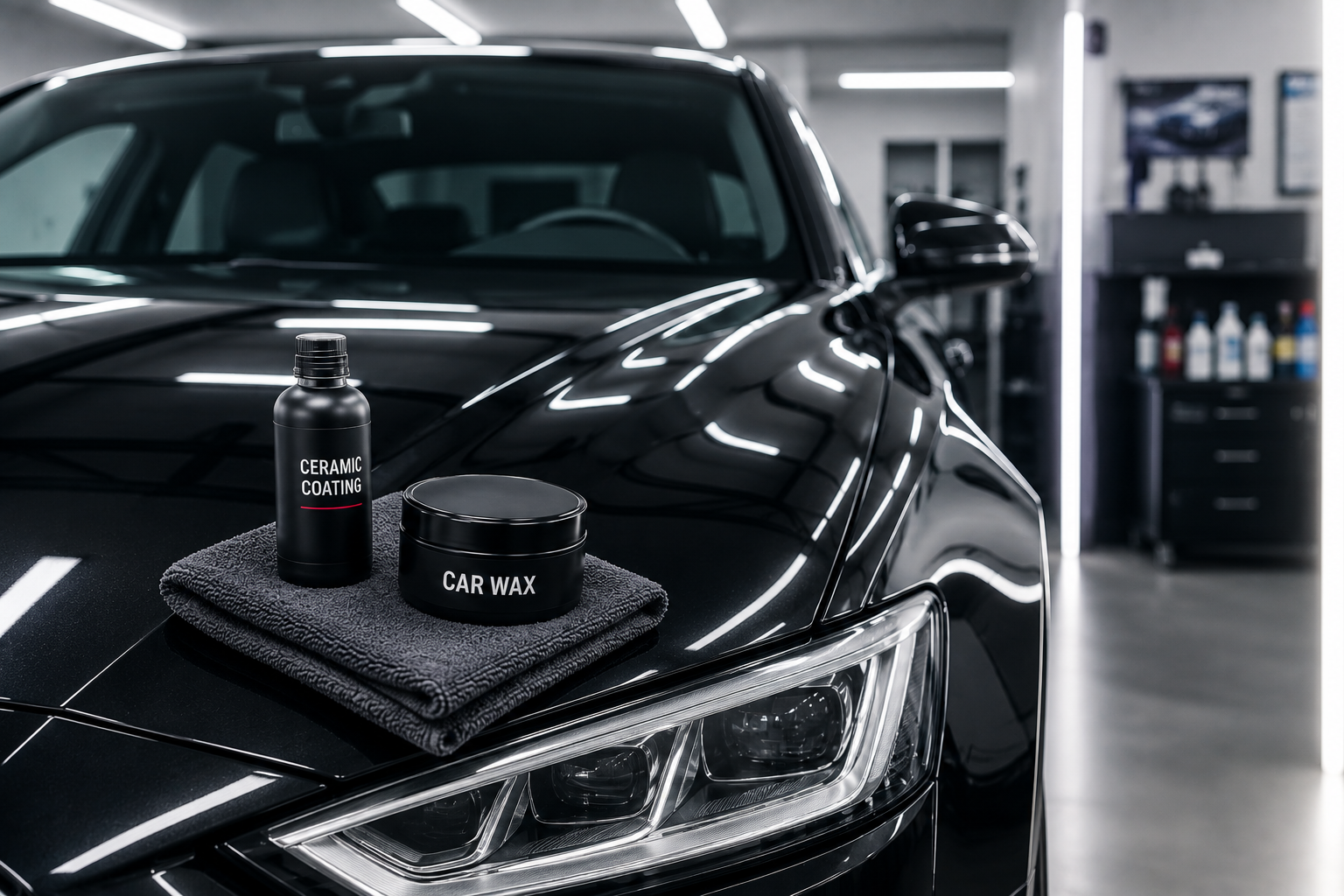
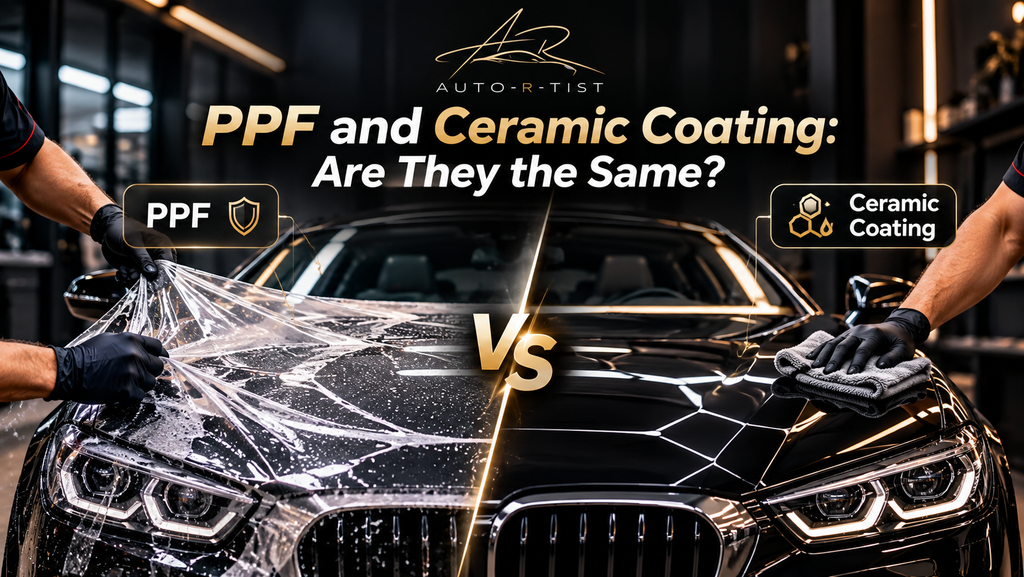
PPF and Ceramic Coating: Are They the Same?
No. PPF and ceramic coating have different purposes.
PPF provides a physical layer that helps protect the paint from impacts and everyday surface damage
Ceramic coating creates a protective surface layer that can improve water repellency, gloss, and ease of cleaning.
For some vehicles, a compatible ceramic coating can be applied over PPF. This combination can provide both physical protection and easier surface maintenance.
How Can You Extend the Life of PPF?
A few simple habits can help your PPF stay in good condition:
- Clean the vehicle regularly.
- Use suitable car-care products.
- Avoid rough brushes and abrasive materials.
- Remove bird droppings and insects promptly.
- Keep strong chemicals away from the film.
- Avoid directing very high-pressure water at film edges.
- Park indoors or under cover whenever possible.
- Check thefilm occasionally for lifting or damage.
- Follow the care instructions provided by the film manufacturer.
These steps are simple, but they can make a noticeable difference over the long term.
When Should PPF Be Replaced?
There is no fixed replacement date for every vehicle.
Instead, look at the actual condition of the film. Replacement may be worth considering when you see extensive cracking, persistent discolouration, peeling, heavy staining, loss of clarity, or widespread damage.
A professional PPF installer can examine the vehicle and determine whether only one section needs replacement or whether a larger area should be renewed.
Is PPF Suitable for Every Car?
PPF can be useful for many types of vehicles, but the amount of coverage depends on the owner’s needs.
It can be particularly useful for:
- Brand-new cars
- Luxury vehicles
- Performance cars
- Daily-use vehicles
- Cars frequently used for highway travel
- Vehicles that need to retain their original paint finish
Some owners choose PPF only for high-impact areas, while others prefer more extensive coverage.
Can PPF Lose Its Clarity Over Time?
Yes. Although high-quality PPF is designed to maintain optical clarity, environmental exposure and improper maintenance can gradually affect its appearance.
Yellowing, staining, surface contamination, or loss of gloss may occur depending on the film quality, age, exposure, and care routine.
Premium films with advanced protective top layers are generally designed to resist these problems more effectively.
Can PPF Be Polished or Waxed?
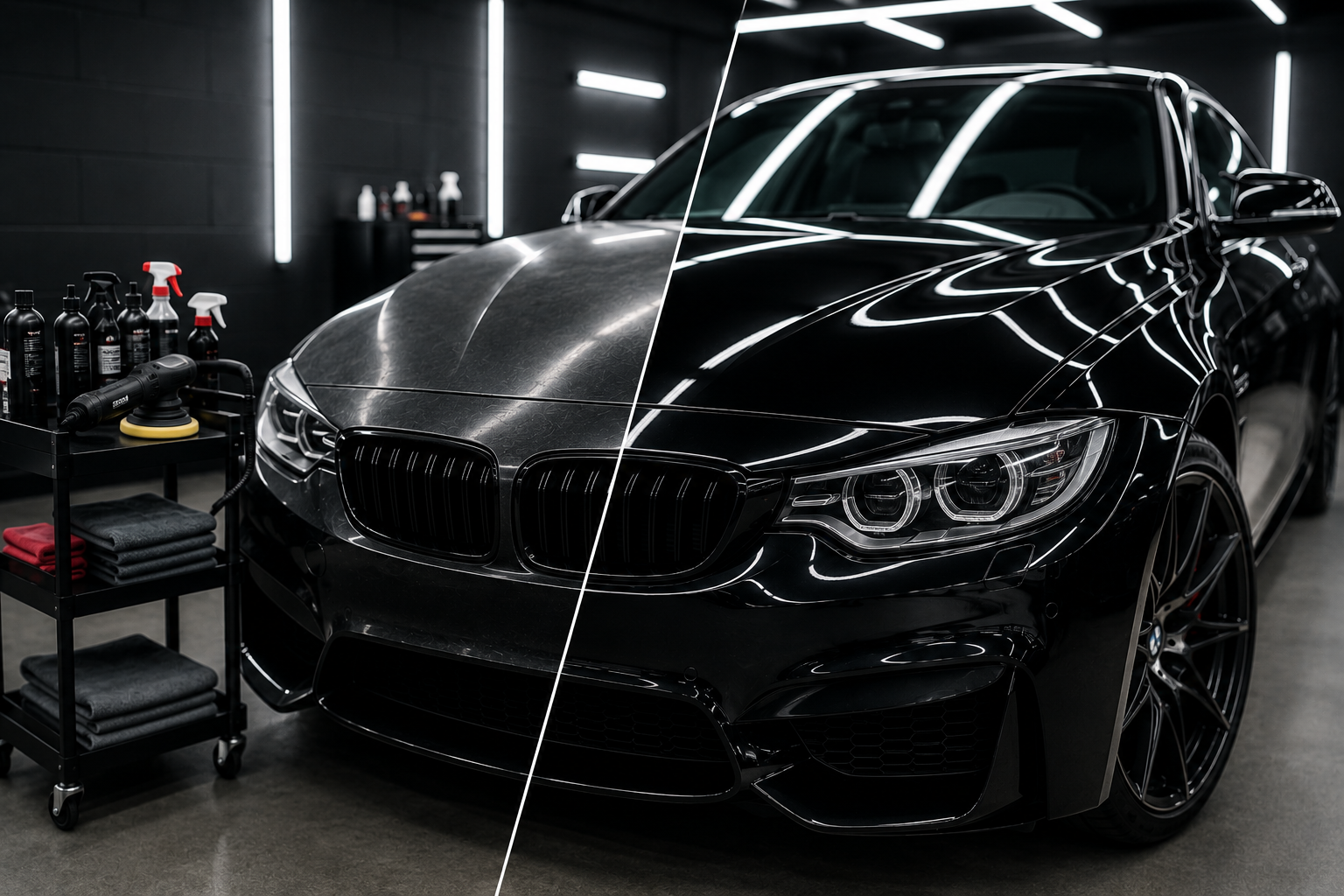
Some PPF surfaces can be maintained using products specifically formulated for paint protection film. However, abrasive polishing compounds should not be used unless they are confirmed to be compatible with the particular film.
For additional surface protection, a compatible PPF coating or maintenance product may be considered.
If you are unsure which detailing product is suitable, professional advice can help prevent accidental damage to the film.
Final Thoughts
So, how long does PPF last?
A good-quality Paint Protection Film can typically provide protection for around 5 to 10 years, although its actual lifespan depends on the film, installation, weather exposure, driving conditions, and maintenance.
The best way to get long-term results is to combine a quality product with professional installation and sensible aftercare.
If preserving your car’s original paint is a priority, PPF can be a practical investment that helps keep the vehicle looking newer for longer.
Frequently Asked Questions
How long can PPF stay on a car?
Quality PPF can generally remain effective for several years, with premium products commonly designed for around 5 to 10 years of service.
Does PPF prevent all scratches?
No. PPF can reduce damage from many everyday hazards, but it cannot prevent every type of scratch or impact.
Can PPF protect against stone damage?
PPF is designed to help reduce the effect of small stones and road debris, especially on high-impact areas of the vehicle.
Is PPF difficult to maintain?
No. Regular washing with suitable products and careful handling is usually enough to maintain the film.
Can I replace only damaged PPF?
In many cases, yes. Individual panels or sections can be replaced when the damage is limited to a particular area.
Does PPF protect the original paint
Yes. One of its main purposes is to create a protective barrier over the vehicle’s original painted surface.
What is better for stone-chip protection: PPF or ceramic coating?
PPF is specifically designed to provide a physical protective layer against road debris and impacts. Ceramic coating is mainly used for surface protection, water repellency, and easier cleaning.