Introduction
Over time, your car’s paint can lose its original shine due to swirl marks, light scratches, oxidation, water spots, road contaminants, and improper washing techniques. Even when the vehicle is regularly cleaned, these imperfections can make the paint look dull and aged.
1. What Is Paint Correction?
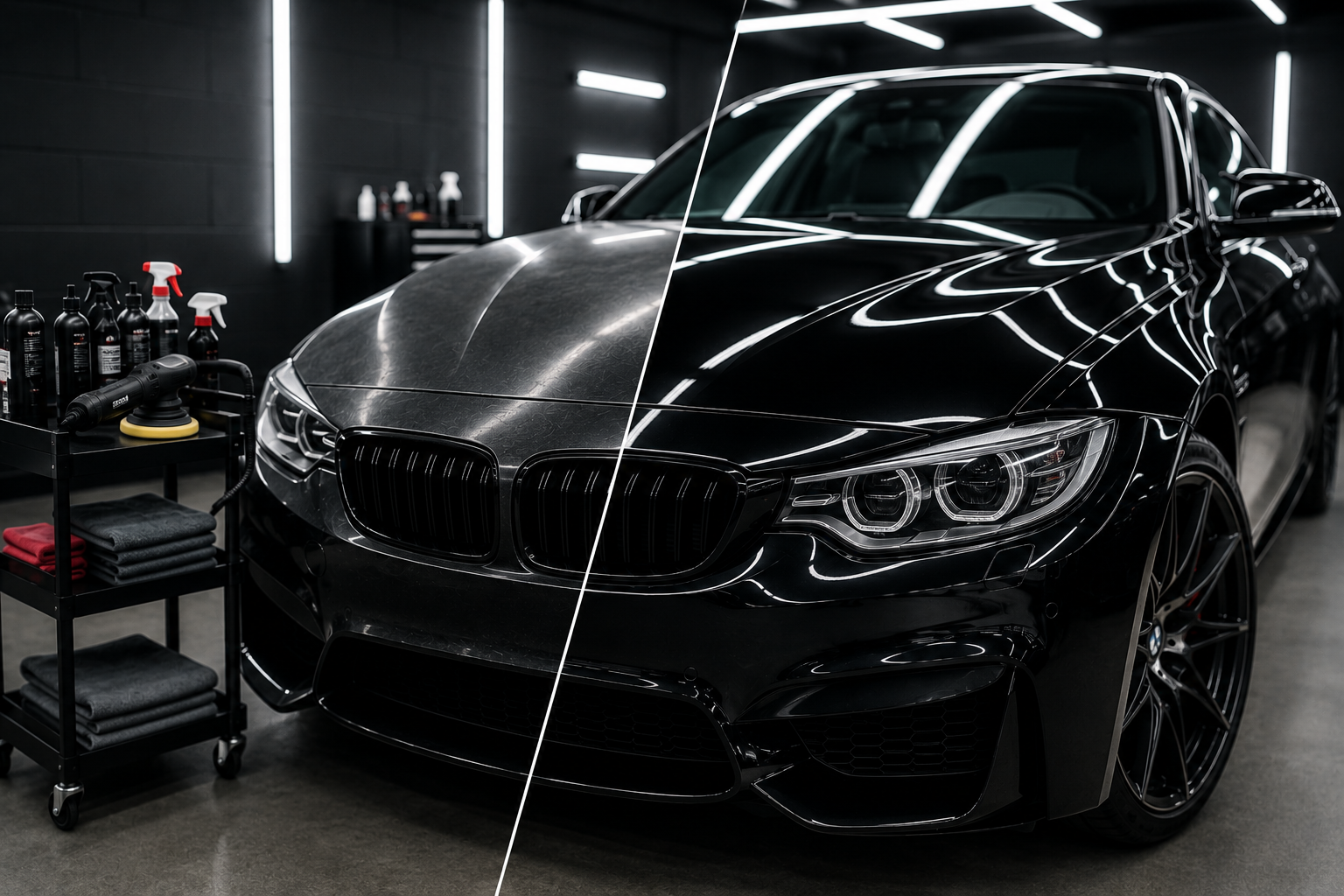
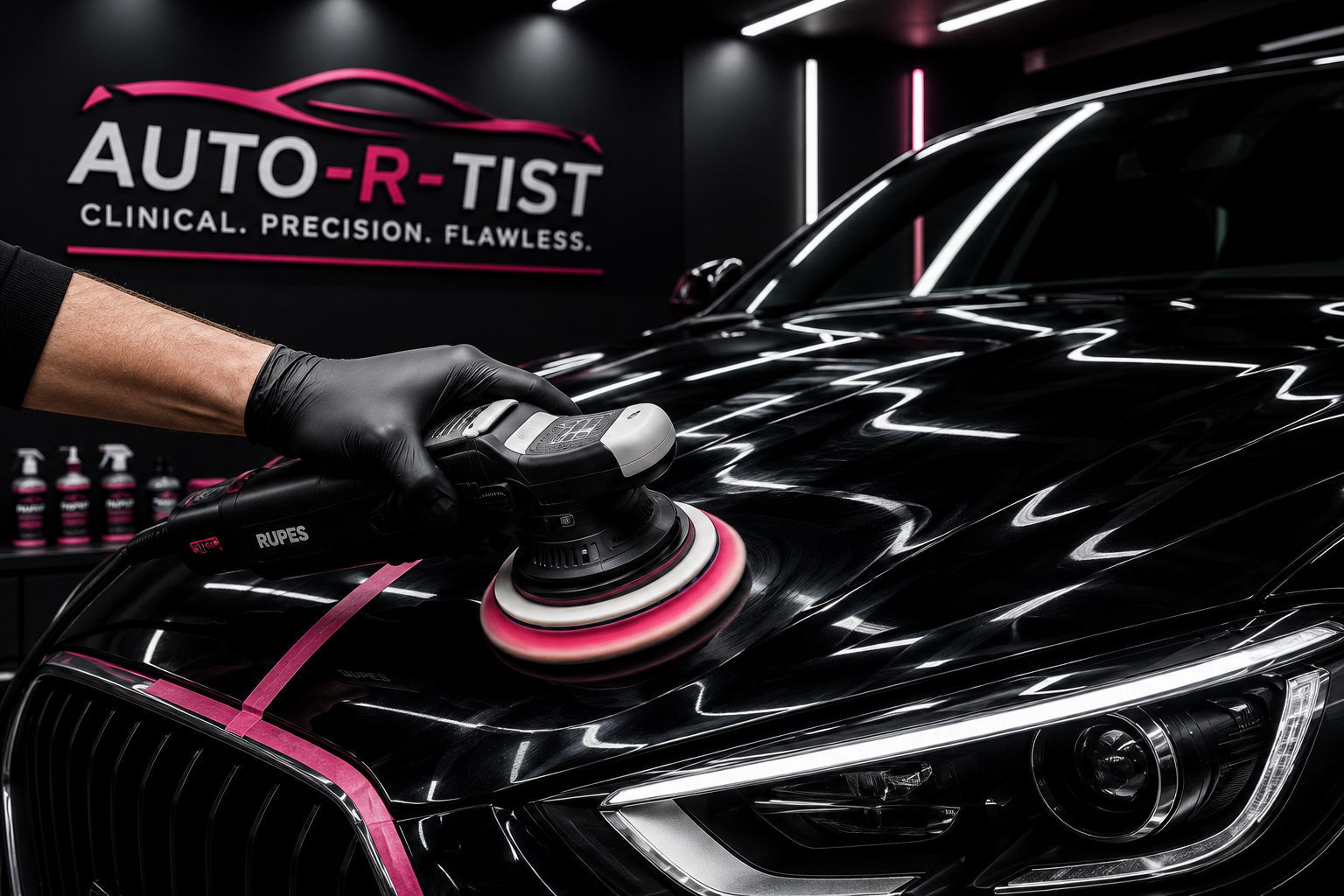
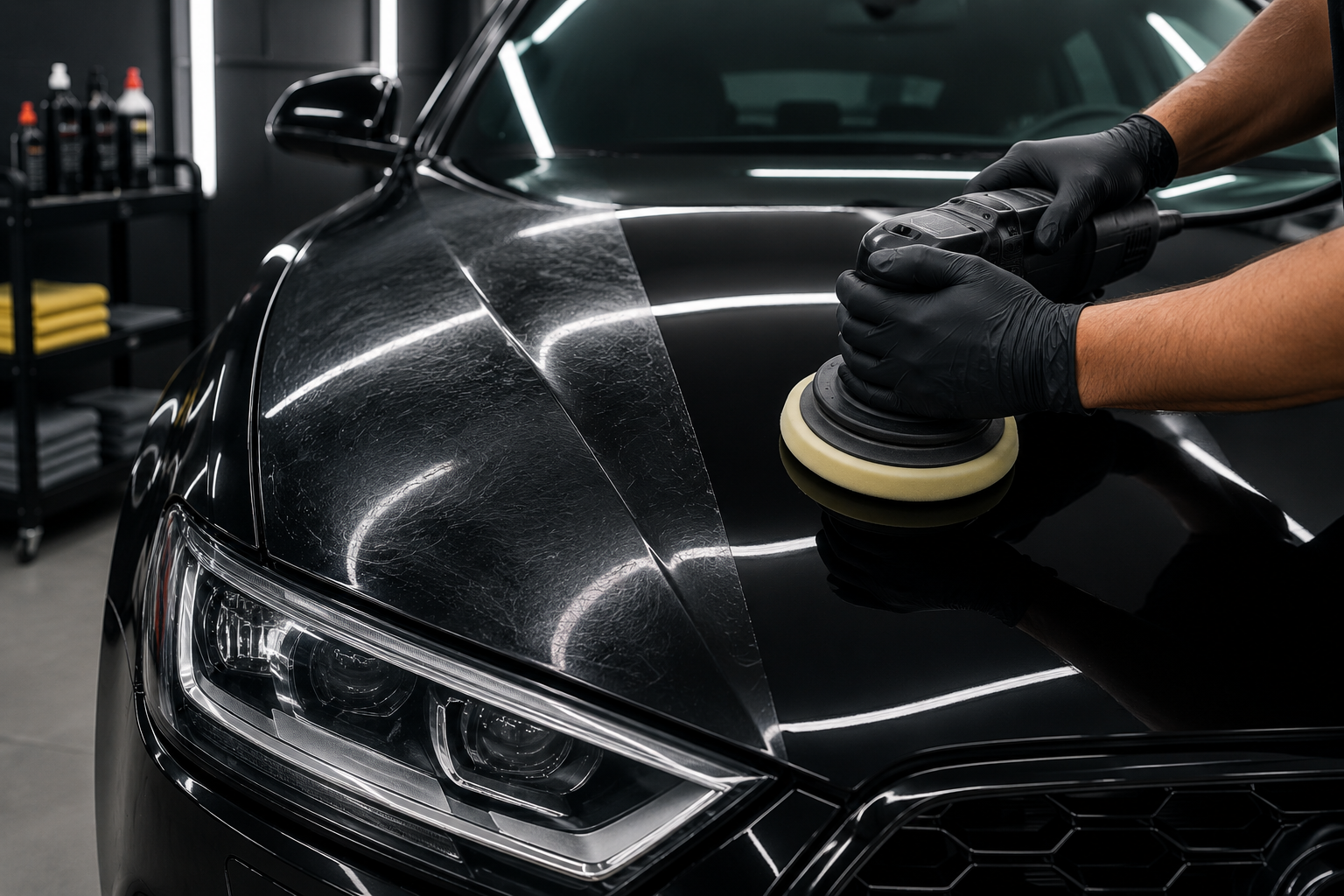
Paint correction is the process of using professional polishing compounds, pads, and machine polishers to refine the vehicle’s paintwork.
Unlike a regular car wash that only removes surface dirt, paint correction works on the paint itself to reduce visible imperfections such as:
- Swirl marks
- Light scratches
- Oxidation
- Water spots
- Holograms
- Paint dullness
- Fine surface imperfections
The result is a smoother, clearer, and more reflective finish.
2. Why Does Car Paint Lose Its Shine?
Your vehicle’s paint is constantly exposed to environmental conditions that can gradually affect its appearance.
UV Exposure
Continuous exposure to sunlight can cause oxidation and reduce the depth and gloss of the paint.
Improper Washing
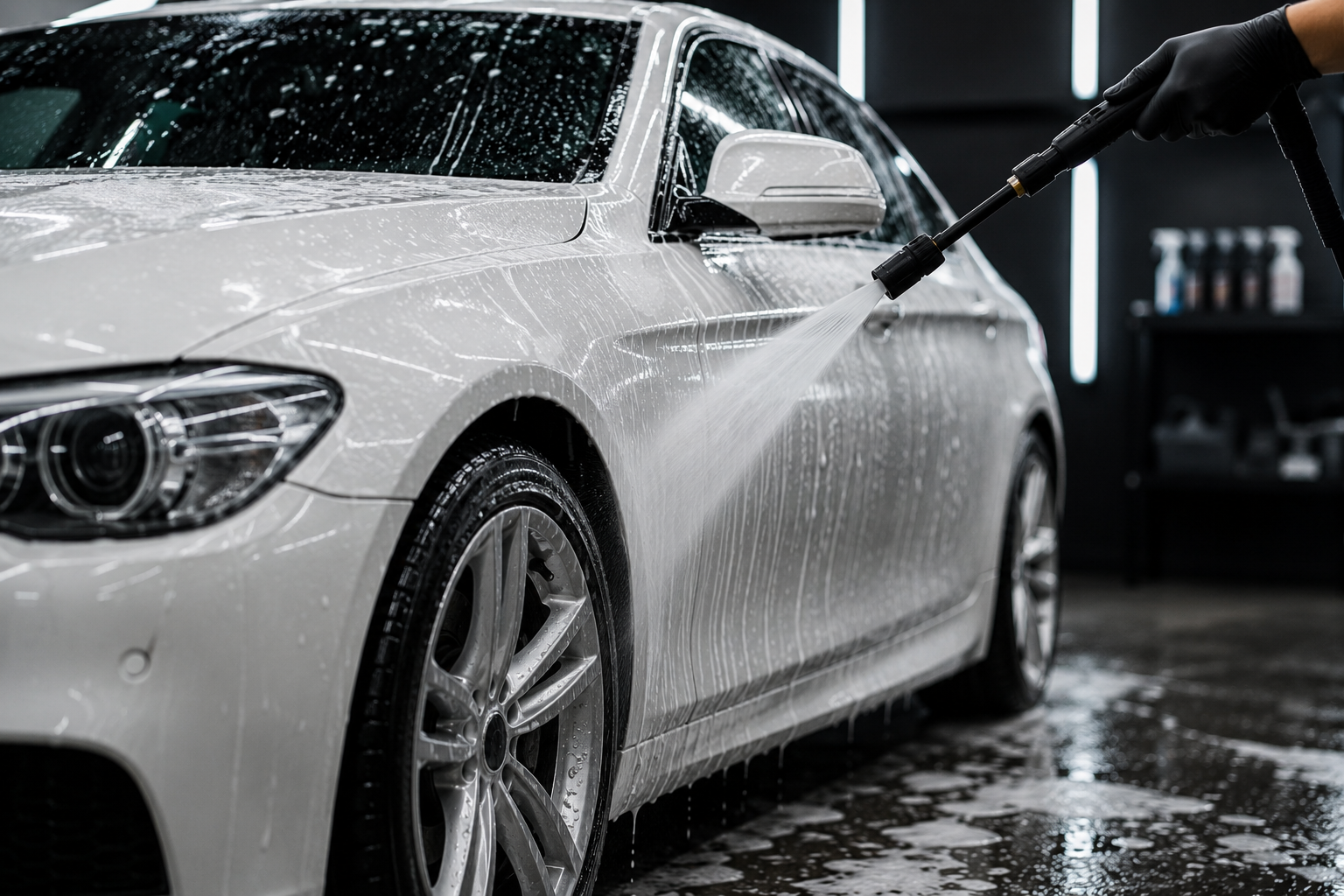
Dirty sponges, rough towels, and automatic brushes can create fine swirl marks and scratches.
Road Contaminants
Dust, pollution, tar, bird droppings, and other contaminants can bond to the paint and affect its finish.
Water Spots
Mineral deposits left behind after water evaporates can create visible marks on the surface.
3. Benefits of Regular Paint Correction
Restores Paint Gloss
Paint correction removes or reduces surface imperfections, allowing the paint to reflect light more evenly and appear significantly glossier.
Removes Swirl Marks
Fine circular scratches caused by improper washing can make dark-colored vehicles look hazy. Professional polishing helps reduce these marks.
Improves Paint Clarity
Corrected paint has greater depth and clarity, making the original color look richer and more vibrant.
Enhances Vehicle Appearance
A properly corrected vehicle can look newer, cleaner, and better maintained without changing its original paint color.
4. Does Paint Correction Remove All Scratches?
Not every scratch can be completely removed.
Paint correction is most effective for surface-level imperfections that are contained within the clear coat. Deeper scratches that have penetrated through the clear coat and into the paint or primer may require additional repair.
A professional inspection can determine how much correction is safely possible without unnecessarily reducing the clear coat.
5. How Often Should You Get Paint Correction?
Paint correction does not need to be performed as frequently as regular washing or detailing.
The frequency depends on:
- Your vehicle’s paint condition
- Washing methods
- Driving environment
- Parking conditions
- Exposure to sunlight and contaminants
- Previous paint correction work
With proper maintenance and careful washing, a vehicle can maintain its corrected finish for a long time.
6. Paint Correction vs Regular Car Washing
| Regular Car Wash | Paint Correction |
|---|---|
| Removes dirt and dust | Reduces paint imperfections |
| Maintains cleanliness | Restores paint appearance |
| Short-term visual improvement | Deeper finish improvement |
| Basic cleaning process | Professional polishing process |
| Does not remove swirl marks | Can significantly reduce swirl marks |
A car wash keeps your vehicle clean, while paint correction helps restore the actual appearance of the paintwork.
7. How to Maintain Corrected Paint
After paint correction, proper maintenance is essential to preserve the results.
- Use a pH-neutral car shampoo.
- Wash with clean microfiber or soft wash mitts.
- Avoid harsh automatic car washes.
- Dry the vehicle with high-quality microfiber towels.
- Remove bird droppings and contaminants quickly.
- Avoid washing the car under direct sunlight.
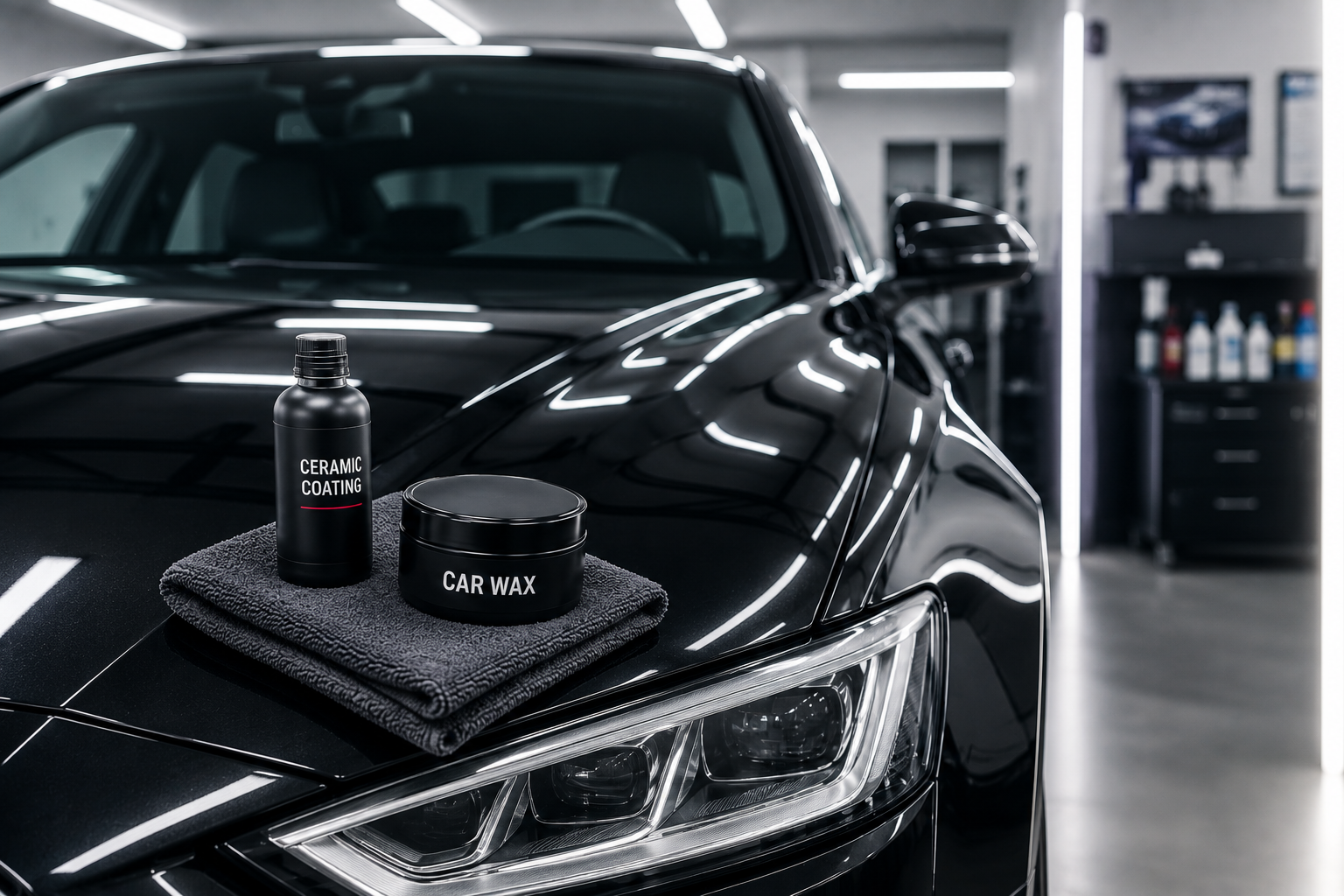
- Consider ceramic coating or other paint protection for additional protection.
8. Paint Correction and Ceramic Coating
Paint correction and ceramic coating can work together effectively.
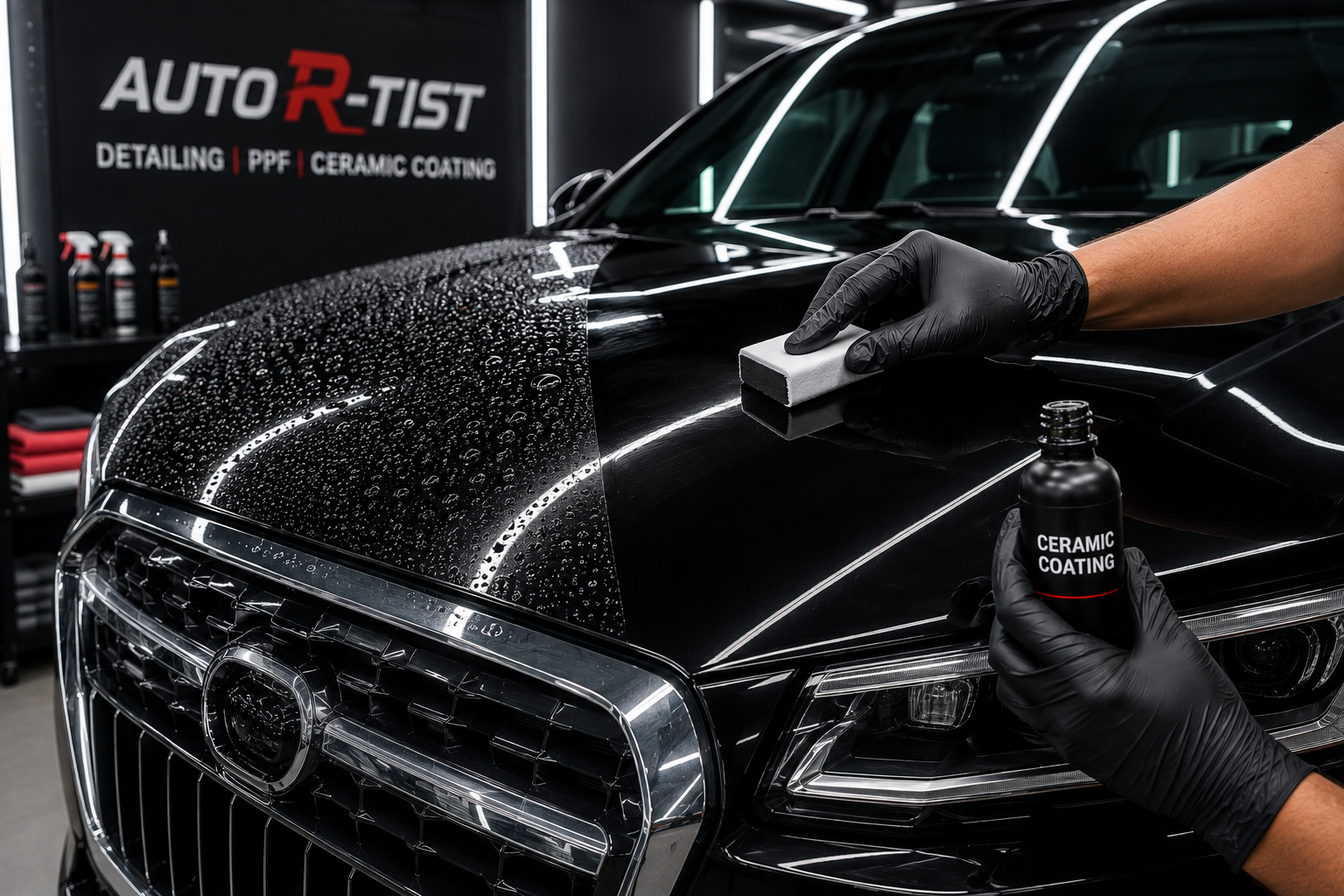
Paint correction restores the appearance of the paint, while ceramic coating helps protect that finish afterward.
Applying a ceramic coating after correction can provide additional hydrophobic properties, make maintenance easier, and help protect the freshly polished surface from environmental contaminants.
Conclusion
Regular paint correction can play an important role in keeping your vehicle looking newer for longer. By reducing swirl marks, light scratches, oxidation, and other surface imperfections, professional correction can restore the gloss and depth that your paint may have lost over time.